The Role of Jury Psychology in Personal Injury Trials
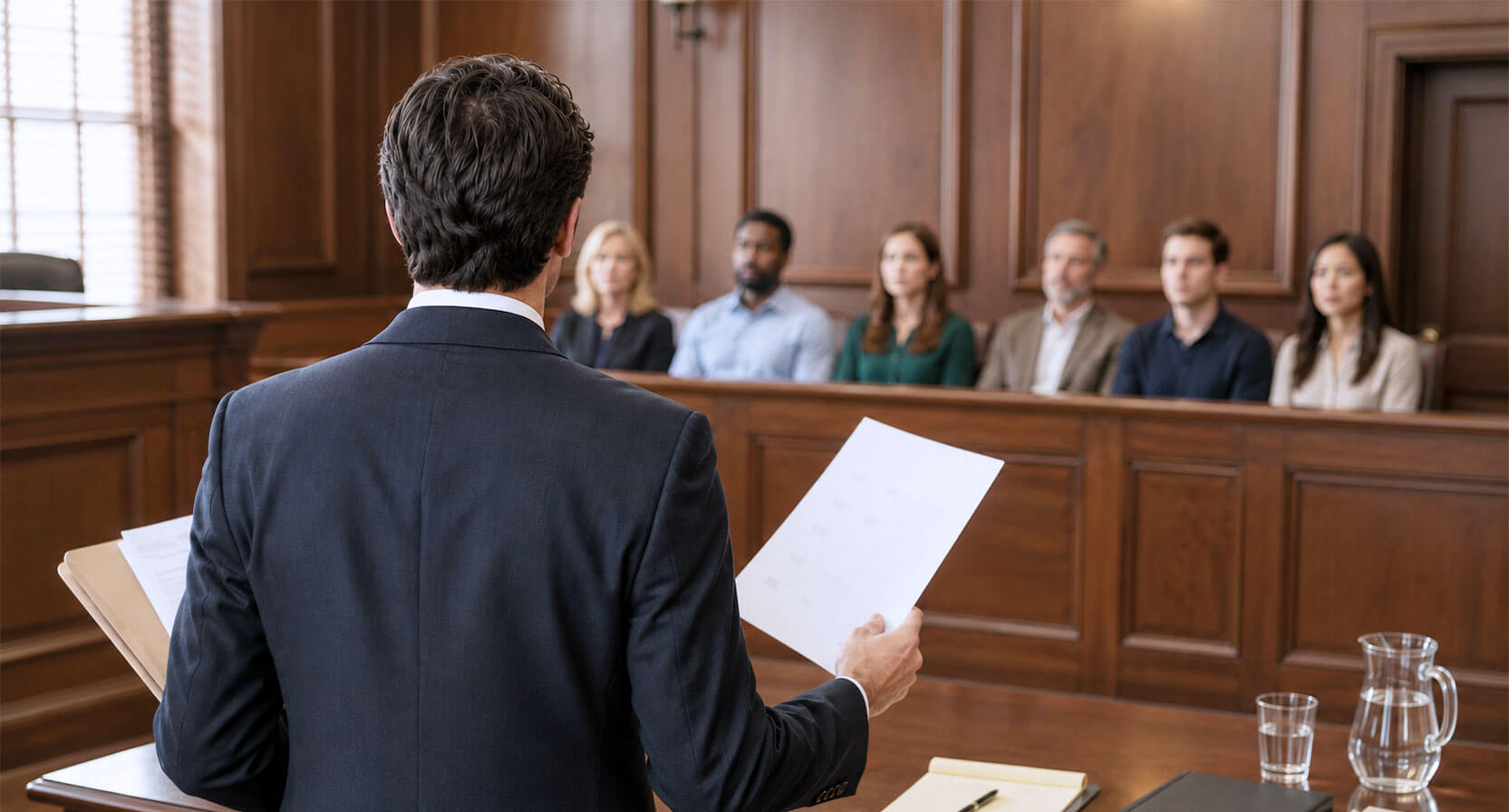
Jury psychology is the study of how jurors take in proof, hold it in mind, and turn it into a verdict. It also examines how twelve strangers agree on a single answer.
Jurors are not blank slates. They walk into the courtroom with their own beliefs, habits, and feelings. This is where jury psychology comes in. It is the study of how jurors think, feel, and decide.
This matters a lot in a personal injury trial. Two juries can hear the same facts. They can still reach very different results. One may award nothing. One may award millions.
This guide explains why that happens. It uses real research, not courtroom myths. It is written for injured people and for the lawyers who help them.
What Is Jury Psychology?
Jury psychology blends law with the social psychology of juries. It looks at how normal people, with no legal training, judge evidence and reach a decision.
Experts call juries a real-world laboratory. Inside this laboratory, real people show real patterns of memory, judgment, and bias. Researchers like Reid Hastie and Nancy Pennington built much of this field. Their Story Model explains that jurors do not just weigh facts one by one. Instead, they build a story in their minds, then pick the verdict that best fits that story. This idea is often referred to as the story model of juror decision-making.
The American Psychology-Law Society, also known as APA Division 41, is the primary home for this work. It is part of the American Psychological Association. Their work shows that juror decision-making depends on far more than just facts. It depends on emotion, memory, and human nature.
Why Jury Psychology Matters in Personal Injury Cases
In a civil jury trial, jurors have two big jobs. First, they decide who is at fault. This is called liability determination. Second, if someone is at fault, jurors decide how much money the injured person should get. This is the damages award.
The second job is very hard. Most jurors have never had to put a price tag on someone’s pain. Studies on quantifying non-economic damages show that jurors often struggle to turn suffering into a dollar amount. Researchers Brian Bornstein and Edith Greene found that jurors often lean on the first number they hear in court. This pattern is called anchoring bias, and it can quietly steer the whole damages award.
Some estimates suggest that choices in the jury selection process shape a large share of outcomes before a single witness even speaks. That is one reason law firms take voir dire so seriously.
Not every injury is treated the same by a jury. This leads to the split between visible vs invisible injuries. A broken leg is easy to see and easy to believe. But credibility for chronic pain and perception of soft tissue injury are harder to prove. Many jurors show skepticism about whiplash claims because they assume these injuries are exaggerated. This bias can hurt real victims of a car accident lawsuit or a catastrophic injury case.
Key Cognitive Biases That Influence Jurors
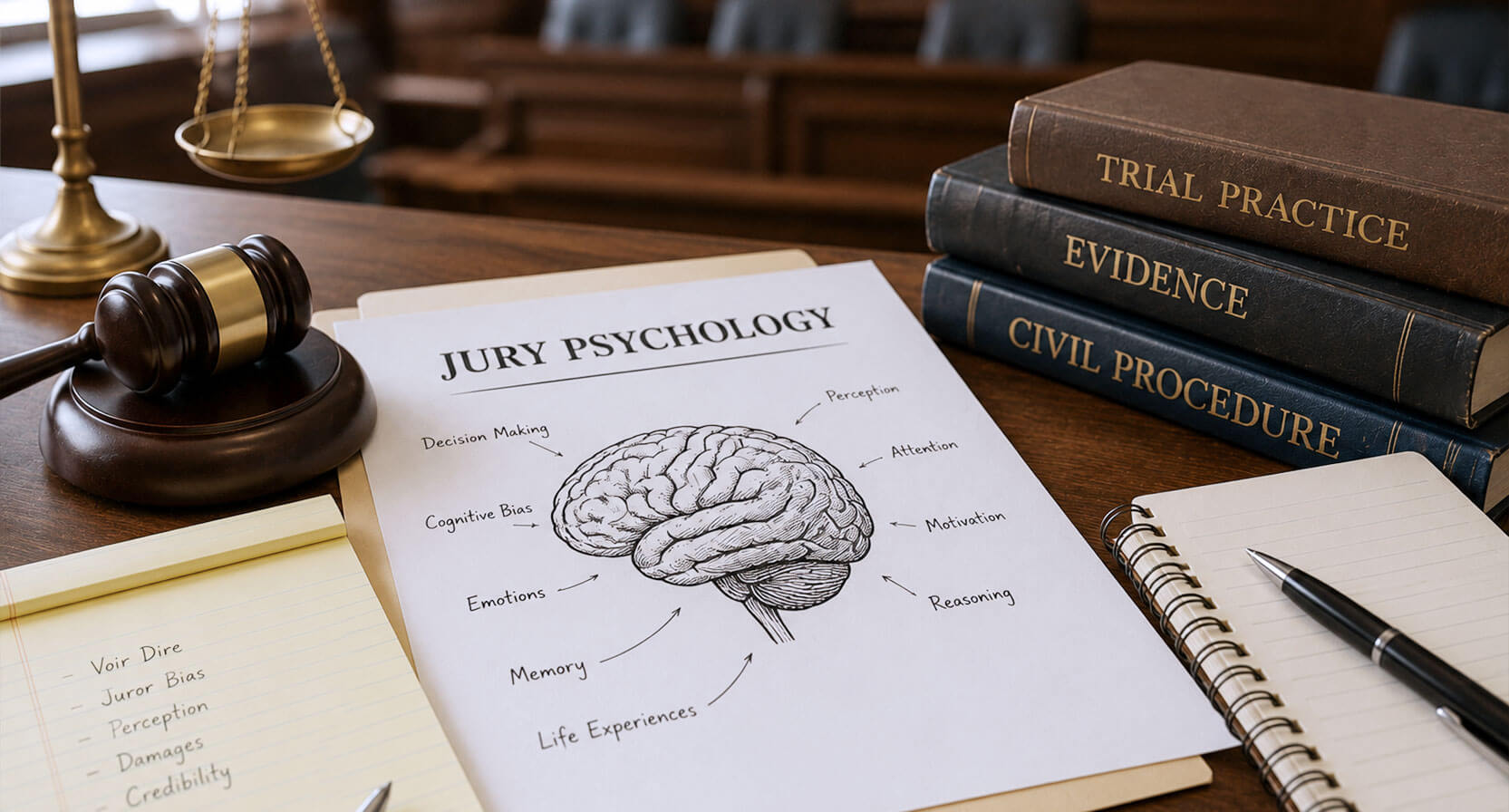
Jurors try to be fair. But the human brain uses shortcuts, called heuristics, to make fast choices. These shortcuts can lead to cognitive bias in jurors without anyone noticing.
- Anchoring bias: The first number or fact presented sticks in a juror’s mind and shapes every judgment that follows.
- Hindsight bias: Once jurors know the outcome, they believe it was easy to predict all along.
- Availability heuristic: Jurors judge how likely something is based on how readily similar cases come to mind, rather than on real odds.
- Representativeness heuristic: Jurors focus on a few standout details rather than the full picture.
- Confirmation bias: Jurors notice facts that support what they already believe and ignore facts that do not.
- Implicit bias: Hidden attitudes about race, gender, or class can quietly shape juror perception, even when a juror means to be fair.
- Affect heuristic: Jurors let their current mood color their judgment of evidence.
- Attribution theory: This explains how jurors decide whether an injury was caused by bad luck, a defendant’s choice, or the plaintiff’s own actions.
- Reactance theory: If jurors feel pushed too hard by a lawyer, they may push back and side with the other party instead.
- Cognitive dissonance: Once a juror picks a side, they often reject new facts that clash with that choice.
- Primacy and recency effect: Jurors remember the first and last things they hear best, and forget much of the middle.
- Juror fatigue: Long trials wear jurors down, which can lower how carefully they weigh later evidence.
Psychologists Daniel Kahneman and Amos Tversky first mapped out many of these mental shortcuts. Their work still shapes how modern behavioral science in law studies jury behavior. Groups fighting juror bias mitigation use this research to build fairer trial methods.
The Emotional Side of Juror Decision-Making
Facts matter, but feelings often matter more. Studies on emotional reasoning among jurors show that people remember how a case made them feel long after they have forgotten the small details.
Juror empathy plays a huge role in a personal injury claim. If jurors feel for the injured person, they tend to award a larger amount. If they feel angry toward the defendant, they may want to punish the defendant. This is why defendant sympathy or defendant likability can shift a verdict just as much as hard proof.
Moral intuition also guides jurors. Many people decide with their gut first, then use logic to defend that gut choice later. This links to dual-process theory, which says the brain has two systems: one fast and emotional, one slow and careful. Juries often lean on the fast system more than we expect.
First impressions matter too. Nonverbal communication in court and the body language of witnesses shape jurors’ assessments of credibility before a single fact is proven. A calm, steady witness often seems more truthful than a nervous one, even if both are telling the truth.
How Attorneys Use Jury Psychology to Their Advantage
Skilled lawyers study jury psychology closely. They use it to guide every choice, from picking jurors to giving the final argument.
Jury Selection and Voir Dire
The jury selection process, known as voir dire, is the first chance to shape a case. Lawyers ask questions to spot juror stereotyping, hidden bias, or life history that might affect judgment. Both sides can remove some jurors without giving a reason. This is called peremptory challenges. Firms often hire a jury consultant or trial consultant to help pick a fair, favorable jury. This service is called jury consulting, and it studies the influence of juror demographics, juror life-experience bias, cultural bias in juries, gender bias in jury verdicts, and socioeconomic bias in verdicts.
Building the Trial Narrative
Lawyers rarely win by listing facts alone. Instead, they build a trial narrative, a clear story with a beginning, middle, and end. This taps into narrative transportation theory, the idea that people who feel pulled into a story judge it more like real life. Storytelling in litigation and framing the plaintiff’s narrative help jurors connect facts into something they can follow and remember.
Persuasion theory and models such as the Elaboration Likelihood Model and the Heuristic-Systematic Model explain two paths jurors use to evaluate an argument. One path is careful and logical. The other is quick and based on surface cues, like how confident a lawyer sounds. Good plaintiff’s and defense attorney strategies aim at both paths at once.
Framing effects matter here too. Asking for a very high but reasonable damages number, then anchoring the jury there, is one common jury persuasion technique. Simple, well-placed demonstrative and visual evidence at trial, such as timelines, charts, or medical images, also helps jurors process hard facts without feeling overwhelmed.
Working With Witnesses and Evidence
Witness credibility and expert witness testimony often decide close cases. A medical expert witness or forensic psychologist may explain injuries in plain language so jurors can understand pain that they cannot see. Lawyers also plan cross-examination tactics carefully, since a shaky cross-examination can hurt a plaintiff’s credibility just as much as weak evidence.
Testing the Case Before Trial
Many firms run a mock trial or use a shadow jury before the real trial starts. In a trial simulation, a practice jury watches the case and gives feedback. This helps lawyers refine case theory development and spot weak spots early. Venue selection, meaning where the trial happens, can also affect the type of jurors who might be chosen, since community values differ by region.
The Role of the Judge and Jury Instructions
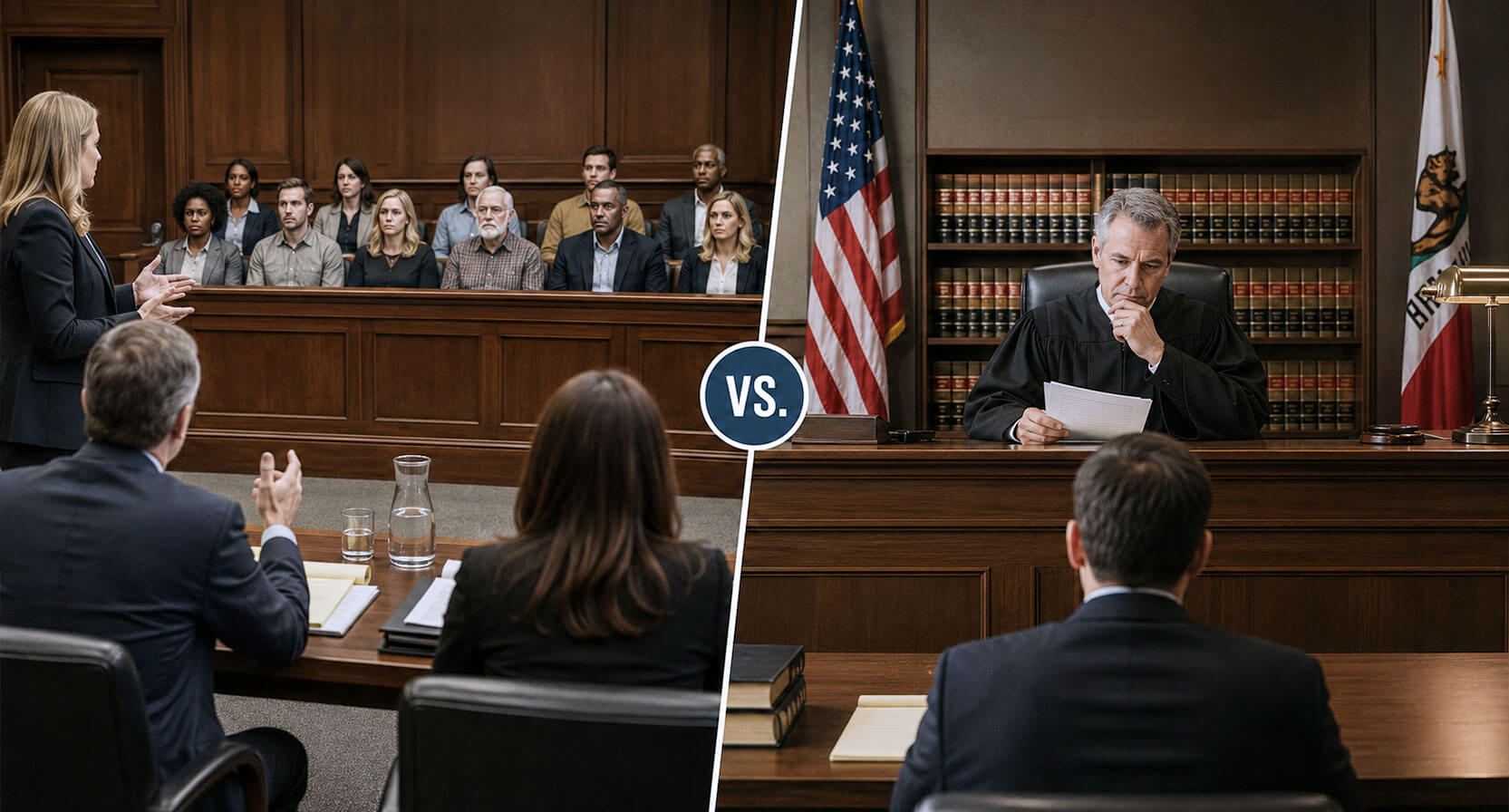
Judges give jury instructions near the end of a trial. These instructions explain the standard of proof, such as preponderance of the evidence, and the burden of proof the plaintiff must meet. In civil litigation, this standard is lower than in criminal court.
The problem is that legal language is often hard to follow. When instructions are confusing, jurors may fall back on moral intuition rather than the law. Clear, simple instructions help jurors apply the negligence standard and other tort law rules as intended.
Jury Deliberation Dynamics
Once the trial ends, jurors move to a private room to decide the verdict together. This stage is full of jury deliberation dynamics and deliberation room dynamics that most trial-goers never see.
Group polarization can happen, where a group’s opinion becomes more extreme after discussion than any single juror’s starting view. Groupthink is a related risk, in which jurors avoid conflict and rush toward agreement rather than full debate. Psychologist Solomon Asch showed decades ago how strongly people can be swayed by group pressure, even when their own eyes tell them something different.
Minority influence in deliberation shows that even one confident, calm juror can shift the whole room. Consensus building among jurors often takes hours, and juror note-taking behavior during the trial can shape which facts get discussed most in that final room.
Researcher Norbert Kerr and psychologist Saul Kassin have both studied how these group forces combine with personal bias to shape a final jury verdict.
Bench Trial vs Jury Trial: A Psychological Comparison
Not every case goes before a jury. In a bench trial, a judge alone decides the case, while in a jury trial, a jury decides.
Jury trials often work better when the injury is easy to see, and the emotional story is strong. This is common in a wrongful death claim or catastrophic injury case, where juror empathy naturally runs high.
Bench trials may work better for complex cases, such as a medical malpractice trial or a product liability case, where questions of the standard of proof become technical. A judge trained in the Federal Rules of Evidence may weigh dense medical or scientific facts more evenly than a jury without that training.
What This Means for Your Personal Injury Case
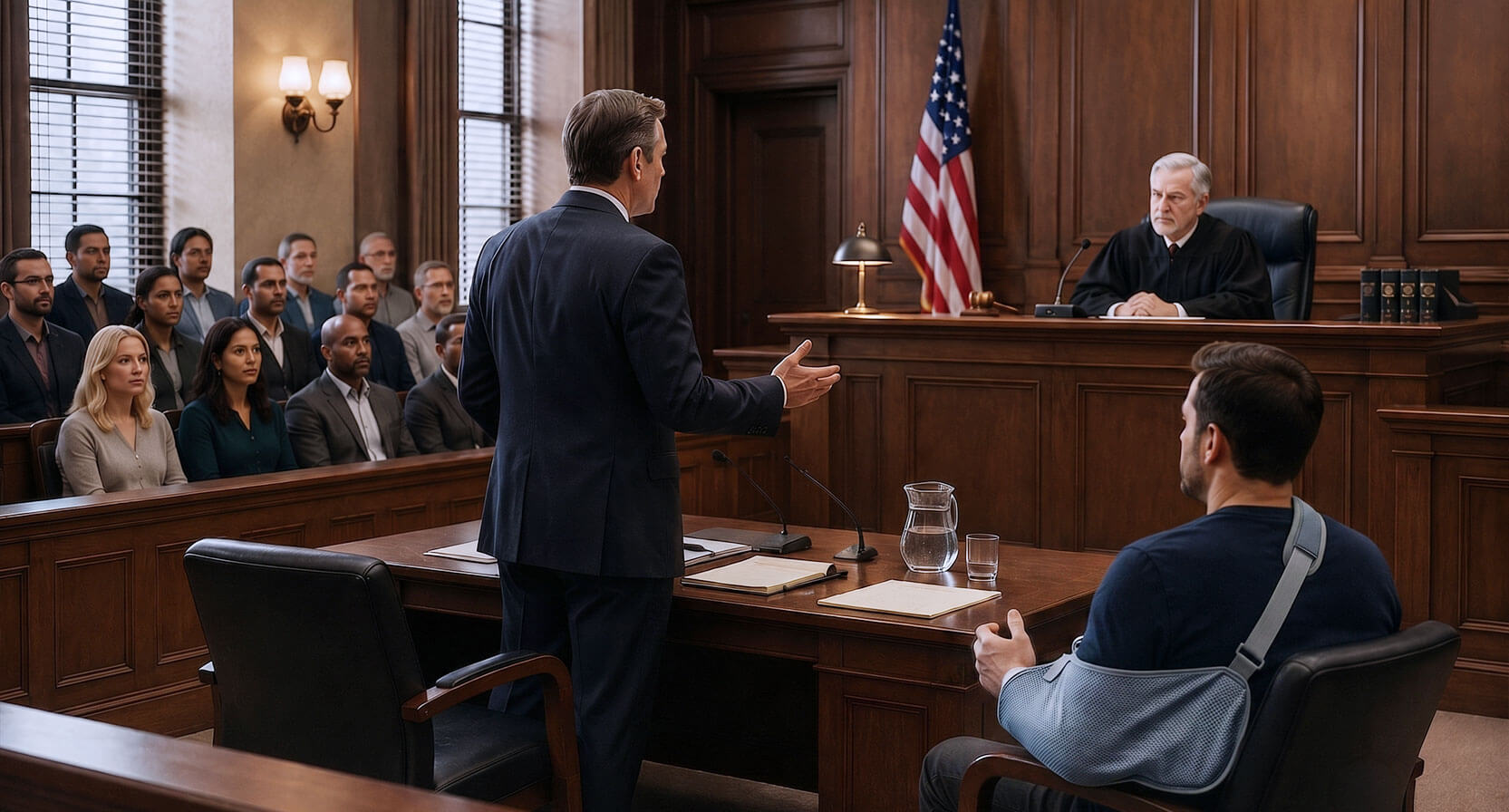
If you have a personal injury claim, the lawyer you choose matters more than most people realize. A lawyer who understands trial consultant strategies and behavioral science in law can shape a stronger trial narrative, prepare better opening statements and closing arguments, and handle insurance company tactics with more skill.
Before a case even reaches trial, most claims go through settlement negotiations. An insurance adjuster or claims adjuster often uses knowledge of jury psychology too. They may offer a lower settlement, betting that jurors will doubt the severity of the injury or reduce an award due to skepticism about whiplash claims. A skilled personal injury attorney pushes back against these tactics using the same psychological insight.
Questions worth asking a potential lawyer include:
- Have you used mock trial testing or a shadow jury before?
- How do you plan to handle jury selection and voir dire in my case?
- What is your strategy for framing the plaintiff’s narrative given the type of injury?
Legal Background Behind Jury Trials
The right to a jury did not appear by accident. In the United States, the Seventh Amendment protects the right to a civil jury trial in many cases, while the Sixth Amendment protects the right to a criminal jury trial. Due process rules, as interpreted by the Supreme Court of the United States, shape how trials must be conducted fairly at both the state and federal levels. If a case is appealed, it moves to an appellate court for review.
Rules such as the Federal Rules of Civil Procedure and the Federal Rules of Evidence govern what proof can be presented to a jury. Ideas like comparative negligence and contributory negligence decide how blame and money get split when both sides share some fault. Ongoing debate around tort reform often centers on how much power juries should have to set punitive damages or compensatory damages.
Key Psychology Terms Used in Trials
Here is a quick glossary of extra terms tied to this field:
- Prospect theory: People weigh possible losses more heavily than equal possible gains, which affects how jurors view risk and damages.
- Social Judgment Theory: People judge new information based on how close or far it is from their existing views.
- Implicit Association Test (IAT): A tool used to measure hidden bias that a person may not know they hold.
- Courtroom rhetoric: The style and word choice a lawyer uses to persuade a jury.
- Courtroom demeanor: How calm, honest, or confident someone appears while speaking in court.
- Juror trust-building: Steps a lawyer takes early in a trial to appear honest and likable to the jury.
Frequently Asked Questions
What is jury psychology?
Jury psychology studies how jurors take in evidence, assess credibility, and reach a verdict together. It draws on research on memory, bias, and group behavior.
How do juries decide pain and suffering money?
Research suggests three steps. Jurors first decide money is owed. Next, they rank the harm as low, medium, or high. Then they pick a number to match that rank.
Can a jury be biased against someone who sues?
Yes. Some jurors believe too many people file suit. Others blame victims to feel safer themselves. Lawyers try to spot these views during jury selection.
What is anchoring in a personal injury trial?
Anchoring means the first number a jury hears shapes the final award. Jurors lack a price list for injuries, so they adjust their awards based on whatever figure is offered.
What is reptile theory?
It is a trial method that frames a case in terms of community safety rules. Defense groups argue it appeals to fear. Plaintiff lawyers argue it explains real duties.
Do jurors follow the judge’s instructions?
Not always. Studies show many jurors misunderstand damage rules or skip required steps. Plain-language instructions help.
Can lawyers look at jurors’ social media?
In most courts, yes, if they view only public posts. Direct contact with a juror is not allowed.
Is a jury verdict final?
Not always. A judge can reduce an award that is far too high. Either side may also appeal.