Understanding the Personal Injury Discovery Process
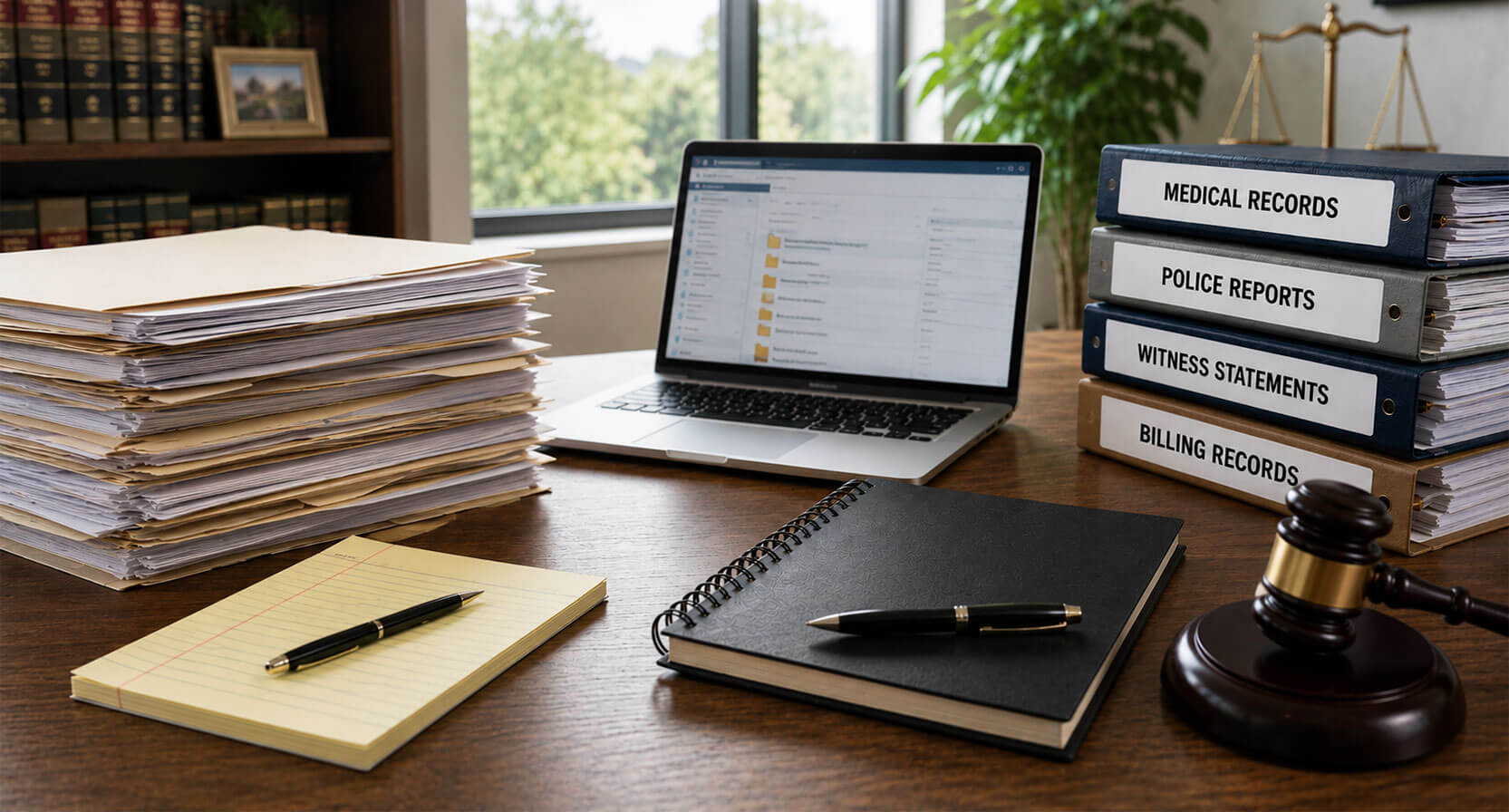
You filed your lawsuit. Weeks passed. Then months passed. Nothing seems to be happening.
Your case did not stall. It entered discovery.
The discovery process in a personal injury case is the stage in which both sides exchange evidence. It starts after the lawsuit is filed. It ends before trial. Most of it happens in offices, not courtrooms.
Here is the short answer on timing. The discovery phase of a lawsuit usually runs six months to a year. Simple cases can wrap up in four to six months. Complex cases can take more than a year.
This guide walks you through each step. You will learn what you must hand over. You will learn what the other side can ask for. You will also learn the mistakes that hurt injured people the most.
What Is Discovery in a Personal Injury Case?
Discovery is the part of a lawsuit in which both sides exchange facts and evidence. It happens after the plaintiff files a complaint and the defendant files an answer. It happens before the trial starts.
During this discovery phase, both sides ask each other questions. They also share documents. This is called formal discovery. The goal is simple. Each side wants to know what proof the other side has. No one should be surprised at trial.
Civil procedure rules control how discovery works. In federal cases, the Federal Rules of Civil Procedure govern. Each state also has its own State Rules of Civil Procedure. These rules set the scope of discovery. They tell both sides what they can and cannot ask for.
Why Discovery Matters for Your Case
Discovery is not just paperwork. It shapes the whole case. Here is why it matters.
- It helps prove the negligence claim at the center of most personal injury cases.
- It supports liability determination, which means figuring out who was at fault.
- It builds the case for settlement negotiations later on.
- It helps meet the burden of proof, which is the duty to show your claim is true.
Strong proof found in discovery often leads to a fair settlement offer. Weak proof can hurt your case. This is why your personal injury attorney takes discovery so seriously.
The Four Tools of Discovery
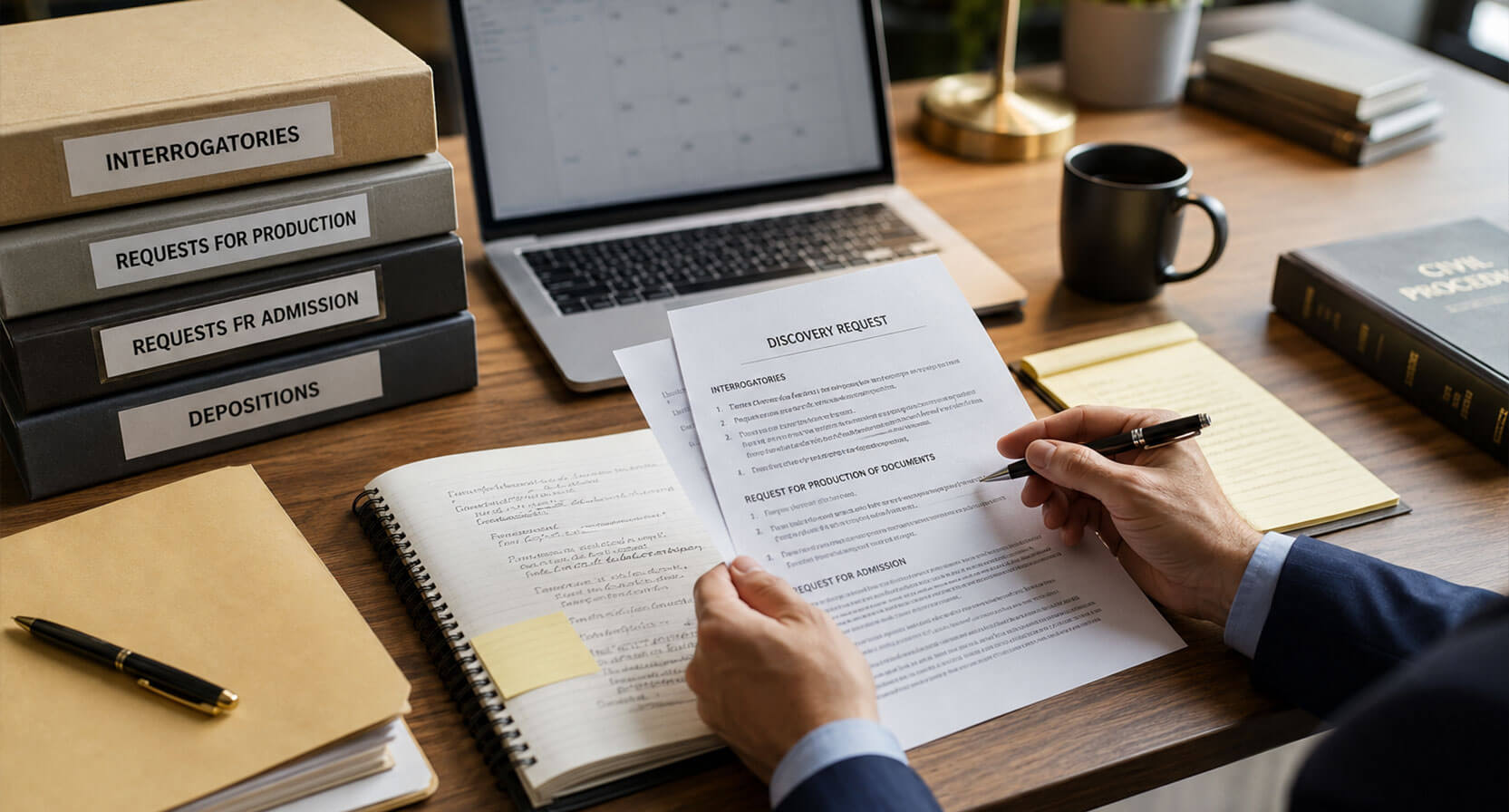
Discovery uses four main tools. Both sides may use all four. The first three are done on paper. Lawyers call that written discovery. The fourth one happens face-to-face.
1. Interrogatories
Interrogatories are written questions. One side sends them to the other side. The person who gets them must answer under oath. This means they promise the answers are true.
There are two kinds:
- Form interrogatories are pre-written questions. Many courts, such as the Texas Judicial Council, offer standard forms.
- Special interrogatories are written just for your case.
Answers to interrogatories are called verified answers. They must follow strict discovery deadlines, often 30 to 45 days. If a party does not respond on time, it can lead to discovery disputes.
2. Requests for Production of Documents
A Request for Production of Documents asks the other side to produce documents or files. This can include:
- Medical records
- The accident report or police report
- Repair bills and photos
- Pay stubs and work records
This step is often just called document production. It covers both paper files and digital files. Digital files fall under electronic discovery, also called e-discovery. This includes electronically stored information (ESI), such as emails or text messages. Lawyers must ensure metadata is preserved during this step. This means keeping the hidden details in a file, like the date it was created, safe and unchanged.
3. Requests for Admission
A Request for Admission asks the other side to admit or deny a fact. For example, one side might ask the other to admit they ran a red light. This tool helps narrow down what is still in dispute. It saves time later at trial.
4. Depositions
A deposition is spoken testimony given under oath, outside of court. A court reporter writes down every word. Sometimes it is also recorded on video, which is called a videotaped deposition.
Here is how a deposition usually works:
- One side sends a deposition notice to the other side.
- Both lawyers and the witness meet, often in an office.
- A lawyer asks deposition questions. This is a form of cross-examination.
- The witness gives sworn testimony, and the court reporter creates a transcript of the deposition.
People who may be called to testify in a deposition include the plaintiff, the defendant, an expert witness, or a third-party witness. In some cases, a company must send its Person Most Qualified (PMQ), also called a corporate representative. This is the employee who knows the most about the topic in question.
An expert deposition covers special topics, such as an accident reconstruction expert explaining how a crash occurred or a medical expert explaining an injury. Lawyers spend time preparing for depositions so their clients know what to expect. A side can also raise deposition objections if a question is unfair. In some cases, a deposition subpoena compels a witness to appear.
Federal rules limit most depositions to one day and seven hours. Courts can allow more time if needed.
How Evidence Is Gathered and Protected
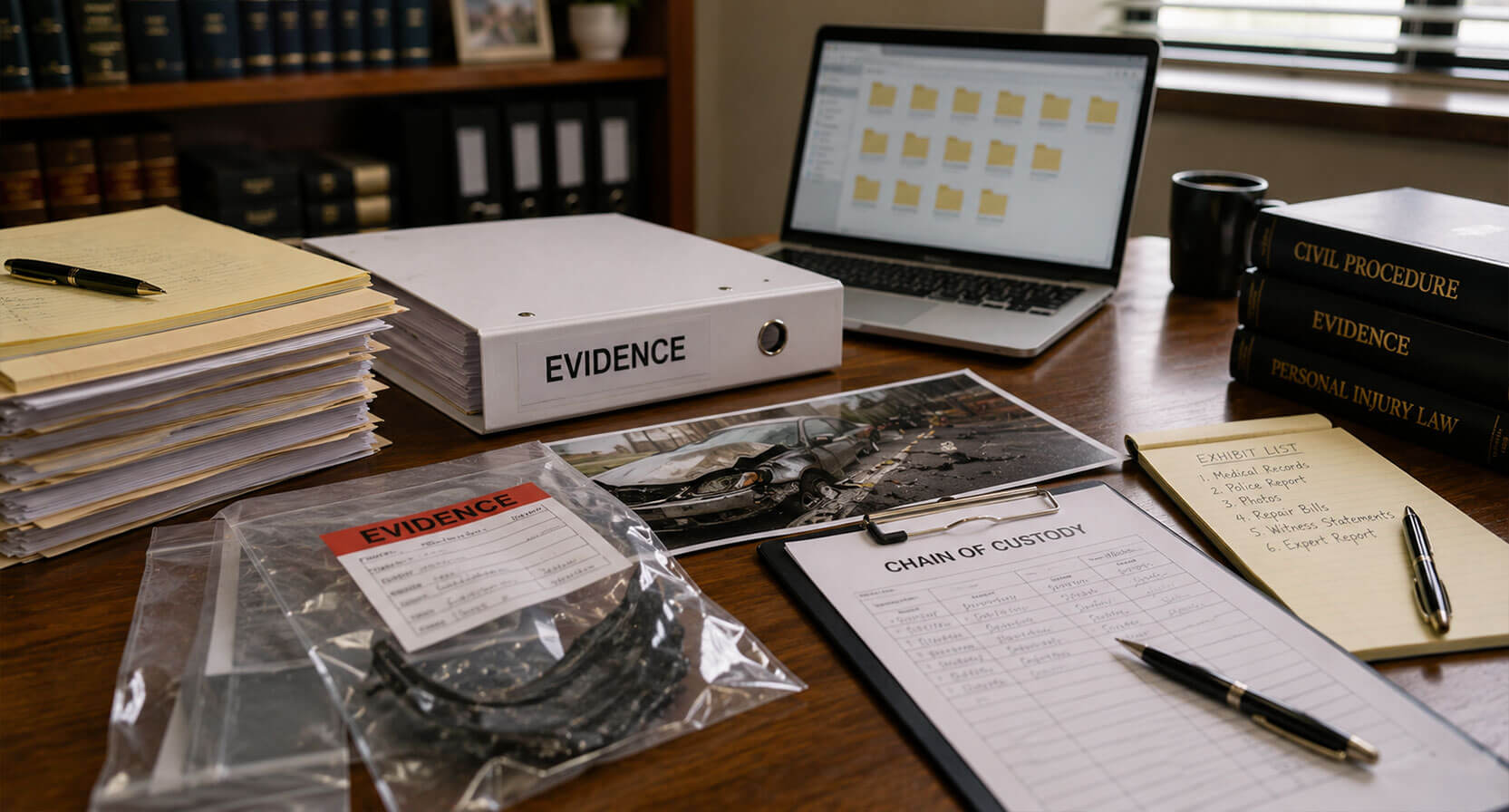
Evidence gathering is at the heart of discovery. Both sides look for relevant evidence, meaning proof that connects to the claim. Not all evidence can be used in court. Only admissible evidence meets the legal rules to be shown to a judge or jury.
Lawyers build an exhibit list of the proof they plan to use. They also protect the chain of custody, which is the record showing who handled a piece of proof and when. This matters for both documentary evidence, such as papers, and physical evidence, such as a broken car part.
Evidence preservation is a legal duty. If someone destroys or hides proof, this is called spoliation of evidence. Courts take this seriously and can punish the party responsible.
Who Is Involved in the Discovery Process
Many people play a role during discovery. Understanding each role can help you follow what is happening in your case.
- Litigants are the people involved in the lawsuit, meaning the plaintiff and the defendant.
- The personal injury lawyer, also called the personal injury attorney, works for the injured person.
- The defense attorney, or defense counsel, represents the other side. Lawyers on the other side are also called opposing counsel.
- An insurance company often pays for the defense. A claims adjuster, also called an insurance adjuster, reviews the case for the insurer.
- An expert witness gives a professional opinion, based on training or experience.
- Eyewitness testimony comes from someone who witnessed the accident.
- A judge oversees the case, and a jury may later decide the outcome at trial.
- The legal team on each side may include paralegals and investigators who support the lawyers.
Step-by-Step: How the Discovery Process Unfolds
Every case is different, but most personal injury cases follow a similar discovery timeline.
- Filing a lawsuit. The plaintiff starts the case by filing a complaint. This is a legal document that lists the facts and the harm caused.
- Complaint and answer. The defendant responds with an answer. Together, these are called the pleadings.
- Written discovery begins. Both sides exchange interrogatories and discovery requests.
- Responses and objections. Each side answers within the set discovery deadlines. A side can raise discovery objections if a request feels unfair, too broad, or private.
- Document exchange. Both sides exchange evidence through document requests, including requests to inspect property, such as a car or a store.
- Depositions take place. Witnesses, experts, and both parties may be questioned under oath.
- Discovery motions. If one side will not cooperate, the other side may file a motion to compel. This asks the court to force a response. A protective order may also be used to keep sensitive details private.
- Discovery closes. A discovery order from the court often sets the final date for this phase.
In some older cases, a bill of particulars may also be used. This is a detailed list of claims and damages, though it is less common today than interrogatories.
How Long Does the Discovery Process Take?
Most personal injury discovery takes a few months to over a year. Simple cases with clear fault, like a small fender bender, may finish faster. Complex cases, like a multi-car crash with several defendants, often take longer.
A few things can stretch the discovery plan out:
- The injured person is still getting medical care.
- Many witnesses or experts are involved.
- One side files discovery motions to fight over what must be shared.
- Court schedules are full, causing delays.
According to legal guides on the topic, discovery in personal injury cases often lasts three months to a year, and sometimes longer in complex claims involving several parties or extensive records.
What’s Expected of You During Discovery
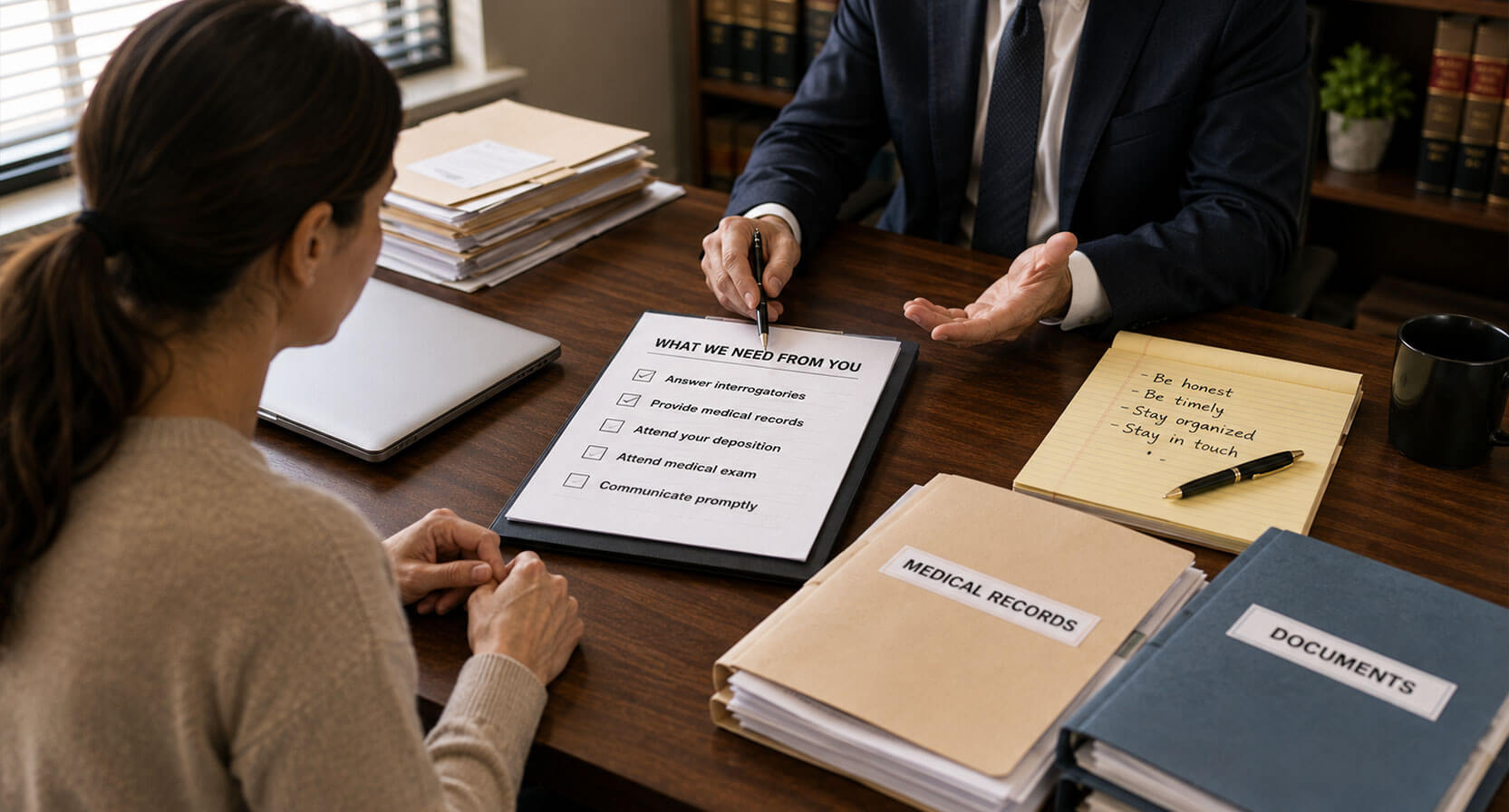
If you are the injured person, you also play an active role. Here is what your personal injury attorney will likely ask you to do:
- Answer interrogatories fully and honestly.
- Turn over requested medical records and other proof on time.
- Prepare for and attend your deposition.
- Attend a medical exam if the defense requests one.
- Stay in touch with your legal team and respond quickly to requests.
Being slow or unclear during discovery can hurt your case. Staying organized helps keep your litigation strategy on track.
Common Challenges and Disputes in Discovery
Discovery does not always go smoothly. Some common problems include:
- Discovery disputes over what must be shared.
- One side raising discovery objections, claiming a request is private or covered by attorney-client privilege. This privilege protects private talks between a client and their lawyer.
- A lawyer’s own notes and case strategy are often shielded by the work-product doctrine, which is separate from the attorney-client privilege.
- A motion to compel, asking a judge to force the other side to answer.
- A protective order, which limits who can see sensitive information, like private medical details.
- A subpoena is a legal order to appear or to provide proof. A subpoena duces tecum specifically orders someone to bring documents.
How Discovery Affects Settlement and Trial
Discovery often decides how a case ends. Strong proof can raise a settlement offer. Weak or mixed proof can lower it.
Here is how key proof often affects damages assessment:
- Clear photos or video of the accident scene often raise the value of a claim.
- Steady medical records showing ongoing treatment support the injury claim.
- Proof of lost wages and medical expenses shows the true cost of the injury.
- Mixed or unclear statements in a deposition can lower the value of a claim.
If both sides cannot agree, they may try mediation or arbitration. These are ways to settle a dispute without a full trial. A neutral person helps guide the talks. If no deal is reached, the case may move toward summary judgment, where a judge rules without a trial, or a full jury trial.
Damages in personal injury cases often include pain and suffering, lost income, and medical bills. In some cases, fault is shared between both sides. This is called comparative negligence. In other rules, called contributory negligence, a person may get nothing if they share any blame. This falls under tort law, the area of law covering harm caused by one person to another.
Before trial, a lawyer sends a demand letter. This letter asks the other side to pay a set amount to settle the claim. Lawyers also complete trial preparation and a full case evaluation to plan their next move. Many personal injury lawyers work on a contingency fee, meaning they only get paid if you win or settle your case.
Frequently Asked Questions
What is the purpose of discovery in a personal injury case?
Discovery helps both sides share facts and proof before trial. It stops surprises and helps both sides judge the strength of the case.
What’s the difference between interrogatories and a deposition?
Interrogatories are written questions answered on paper. A deposition is spoken testimony given in person and recorded by a court reporter.
How long does discovery typically last?
Most cases take three months to over a year. Complex cases with many parties or long medical treatment often take longer.
Can you settle a case before discovery is finished?
Yes. Many cases settle during discovery, especially after depositions, once both sides understand the strength of the evidence.
What happens if the other side doesn’t respond to discovery requests?
The other side can file a motion to compel. This asks the court to order a response.
Do I need a lawyer during discovery?
Yes. An experienced personal injury lawyer knows the rules, deadlines, and strategy needed to protect your claim during this phase.