
Preservation of Evidence Letter (Template + Sample)
A preservation of evidence letter is a simple but powerful legal tool. It is also called a litigation hold letter, legal hold notice, or spoliation letter. This letter tells a person or company to keep all important evidence safe for a legal dispute.
In any lawsuit or legal dispute, evidence is key. This can include documents, emails, text messages, contracts, photos, or videos. Today, many cases also depend on electronically stored information (ESI) such as cloud data, server logs, and digital records.
A preservation letter is usually sent before or during litigation. It creates a clear request to preserve evidence and stop any deletion or change. This helps protect the discovery process and ensures both sides have fair access to facts.
Why This Letter Matters
When a legal notice is sent, it triggers a duty to preserve evidence. This duty can arise when litigation is reasonably anticipated, even before a case is filed.
If evidence is lost or destroyed, it may result in spoliation. Courts can then impose sanctions under the Federal Rules of Civil Procedure (FRCP), including Rule 37, which provides penalties for failing to preserve evidence.
These penalties may include:
- Adverse inference doctrine
- Fines or legal penalties
- Limits on evidence use
- Even case dismissal
Because of this, a preservation letter is a key part of legal compliance, risk management, and information governance.
Where This Applies
A preservation of evidence letter template is used in many cases, such as:
- Personal injury claims
- Employment litigation
- Contract disputes
- Regulatory investigations
- Internal investigations
It can be sent to:
- A defendant or opposing party
- A third party holding evidence
- A company’s corporate legal department
Teams like IT administrators, compliance officers, or eDiscovery specialists
What Is a Preservation of Evidence Letter?
A preservation of evidence letter is a formal legal notice sent to a person, company, or third party. It tells them to keep all evidence related to a legal case safe. This letter is also known as a litigation hold letter, legal hold notice, or preservation notice.
In simple terms, it is a written request that says:
Do not delete, change, or destroy anything important to this dispute.
Simple Definition
A preservation letter is a document that:
- Puts someone on notice of a legal dispute
- Requires them to preserve evidence
- Helps protect the discovery process
It applies to both physical records and electronically stored information (ESI), such as emails, messages, and cloud files.
What Does This Letter Do?
A preservation of evidence letter has two main goals:
1. Notify About Legal Action
It informs the other party that a lawsuit or legal claim may happen.
2. Protect Important Evidence
It tells them to keep all relevant documents, data, and materials in their current form.
This includes:
- Emails and text messages
- Contracts and business records
- Photos, videos, and surveillance
- Cloud storage and backup systems
Why It Is Called a Litigation Hold
A litigation hold is a process that stops normal data deletion.
When this letter is sent:
- Document retention policies must be paused
- Auto-delete systems must stop
- All relevant data must be kept safe
This creates a legal obligation to preserve evidence once litigation is reasonably anticipated.
When Does the Duty to Preserve Start?
The duty to preserve evidence does not always wait for a lawsuit. It begins when:
- A dispute becomes serious
- A claim is expected
- A legal notice or demand is sent
Even without a letter, the law may still require preservation. The letter simply makes this duty clear and undeniable.
How It Fits Into the Legal Process
A preservation notice is an early step in the civil procedure and eDiscovery process.
It connects to:
- Evidence law, and fairness in court
- The Electronic Discovery Reference Model (EDRM)
Key cases like Zubulake v. UBS Warburg, which stress the need to issue a legal hold
Why Is a Preservation Letter Important?
A preservation of evidence letter is very important in any legal dispute. It helps protect the truth and keeps your case strong from the start.
Without this letter, important evidence like emails, documents, or videos can be lost forever.
1. It Creates a Legal Duty to Preserve Evidence
When you send a preservation notice or litigation hold letter, it tells the other party they must keep all relevant documents and data safe.
This creates a clear duty to preserve evidence. Once they receive the letter, they cannot delete or change important information.
This duty applies to:
- Electronically stored information (ESI)
- Physical records and documents
- Communications like emails and text messages
2. It Prevents Spoliation of Evidence
Spoliation of evidence means destroying, hiding, or changing evidence.
If evidence is lost, the court may assume it was harmful to the party who destroyed it. This is called the adverse inference doctrine.
A preservation letter helps stop this problem before it happens.
3. It Protects the Discovery Process
The discovery process is how both sides collect facts in a case.
If evidence is missing, the process becomes unfair. Courts depend on complete and accurate information to make decisions.
A preservation demand letter ensures:
- Evidence stays complete
- Data is not deleted
- Both sides can access the same facts
4. It Helps You Avoid Serious Legal Penalties
If someone ignores a legal hold notice and destroys evidence, courts can apply strong penalties.
These may include:
- Spoliation sanctions
- Fines and legal costs
- Limits on using evidence
- Case dismissal or default judgment
Courts have the power to punish parties who fail to preserve evidence after notice.
5. It Strengthens Your Legal Case
Sending a preservation letter template early shows that you are serious about your claim.
It also creates proof that:
- The other party knew about the dispute
- They were warned to keep the evidence
- Any later loss of data is their responsibility
This can improve your position in court and support your legal compliance strategy.
6. It Is a Key Risk Management Tool
A preservation of evidence letter is not just for lawyers. It is also used by:
- Corporate legal departments
- Compliance officers
- IT administrators
- eDiscovery specialists
It helps organizations manage data preservation, follow document retention policies, and avoid legal risks.
When Should You Send a Preservation of Evidence Letter?
Timing is very important when sending a preservation of evidence letter. If you send it too late, key evidence may already be lost.
1. When Litigation Is Reasonably Anticipated
You should send a preservation notice when a lawsuit is likely, even if it has not yet been filed.
The law says the duty to preserve evidence begins when litigation is reasonably anticipated, not when the case starts in court.
This means you must act when:
- There is a serious legal dispute
- You believe a claim will be filed
- You plan to file a lawsuit yourself
2. After a Trigger Event
Certain events clearly indicate that you should send a litigation hold letter immediately.
Common trigger events:
- A serious accident or incident
- A contract dispute or breach
- Receiving a legal complaint or threat
- Sending or receiving a demand letter
- Start of an internal investigation or regulatory investigation
These events create a credible threat of litigation, which triggers the need to preserve evidence.
3. Before Evidence Gets Deleted
Many systems delete data automatically. This includes:
- Emails
- Server logs
- Backup files
- Cloud storage data
A legal hold notice must be sent quickly to stop these systems. It requires the recipient to suspend document retention policies and keep all relevant data.
4. Before Filing a Lawsuit
A pre-litigation preservation letter is often sent before a case is filed.
This helps you:
- Protect key electronically stored information (ESI)
- Secure physical evidence
- Show the court you acted early and responsibly
It also warns the other party that they must not destroy evidence.
5. When You Control Evidence Yourself
If you are planning legal action, you must also preserve your own evidence.
The duty applies to:
- Individuals
- Businesses
- Corporate legal departments
- Teams like IT administrators and eDiscovery specialists
Even internal discussions about a claim can trigger this duty.
6. Why Early Action Matters
Delaying a preservation demand letter can lead to:
- Lost or deleted data
- Weak legal claims
- Higher risk of spoliation of evidence
Courts expect parties to act quickly once a dispute becomes serious. Acting late can harm your case and reduce your legal protection.
Types of Evidence to Request Preservation For
A strong preservation of evidence letter must clearly list the types of evidence that must be saved. This is one of the most important parts of a litigation hold letter.
If you do not list the right evidence, it may be lost, deleted, or ignored. Courts expect you to be clear and specific.
1. Electronic Evidence (ESI)
Today, most cases involve electronically stored information (ESI). This type of data is a key part of eDiscovery and must be preserved carefully.
Common digital evidence includes:
- Emails and attachments
- Text messages and chat logs
- Social media posts
- Cloud storage files
- Server logs and system data
- Backup systems and archives
- Metadata from documents
This data is often deleted automatically, so a legal hold notice must stop these processes quickly.
2. Physical Evidence
A preservation notice should also include physical items that may be important to the case.
Examples:
- Vehicles in accident cases
- Equipment or machinery
- Clothing or damaged items
- Product samples
- Debris from an incident
These items must be kept in their original condition for proper analysis.
3. Documents and Business Records
Many legal cases depend on written records.
Examples:
- Contracts and agreements
- Reports and internal records
- Invoices and financial data
- Employee files
- Policies and manuals
These records help prove facts and show what happened in a legal dispute.
4. Photos, Videos, and Surveillance
Visual evidence is often very strong in court.
You should request:
- CCTV or surveillance footage
- Photos from the scene
- Videos from phones or cameras
- Security system recordings
For example, accident cases often depend on video footage or photos taken at the time of the event.
5. Communications
Communication records can show intent, timing, and key details.
Include:
- Emails between parties
- Text messages
- Internal company chats
- Letters and written correspondence
These records often reveal what people knew and when they knew it.
6. Reports and Official Records
Some evidence comes from third parties or official sources.
Examples:
- Police reports
- Medical records
- Accident reports
- Insurance documents
- Witness statements
These documents are often critical in personal injury claims and employment litigation.
7. Industry-Specific Evidence
Different cases require different types of evidence.
Examples:
- Vehicle black box data in accidents
- Maintenance logs for equipment
- Product design and testing records
- Compliance and safety reports
There is no strict limit on what you can request. The goal is to preserve anything that may help prove your case.
Why Being Specific Matters
A good preservation demand letter does not just say “save everything.”
Instead, it should:
- List clear categories of evidence
- Define a timeframe
- Identify key custodians
This ensures proper data preservation and reduces the risk of spoliation of evidence.
How to Write a Preservation of Evidence Letter (Step-by-Step)
Writing a preservation of evidence letter is not hard if you follow a clear process. The goal is to make a formal request that is easy to understand and legally strong.
A good litigation hold letter must clearly request that the other party preserve all relevant documents and electronically stored information (ESI).
Step 1: Add Header and Contact Information
Start your letter with basic details:
- Your name and address
- Name of legal counsel or law firm
- Recipient’s name and address
- Date
This shows who is sending the legal notice and who must follow it.
Step 2: Describe the Legal Matter
Explain the legal dispute in simple words. Include:
- What happened
- Key dates and events
- Type of case, such as employment litigation or contract dispute
This section helps the reader understand why the letter matters.
Step 3: State That Litigation Is Expected
Clearly say that litigation is reasonably anticipated.
This is very important because it triggers the duty to preserve evidence.
Step 4: Make a Clear Preservation Demand
Now make a direct request.
State that this is a formal preservation demand letter and require the recipient to:
- Keep all relevant documents
- Protect all data and records
- Avoid deletion, change, or destruction
This step creates a clear legal obligation.
Step 5: List Specific Evidence to Preserve
This is the most important part of the letter.
Be specific and detailed. For example:
- Emails between certain people
- Text messages within a date range
- Contracts, reports, and files
- Cloud storage and backup data
Avoid general phrases like “all documents.” Courts expect a clear list of evidence.
Step 6: Define the Timeframe
State the exact time period for the evidence.
Example:
- January 2023 to December 2024
This helps ensure proper data preservation and avoids confusion.
Step 7: Instruct to Suspend Deletion Policies
Tell the recipient to stop normal document retention policies.
This includes:
- Auto-delete systems
- Backup recycling
- File cleanup processes
A legal hold notice must override these systems to prevent spoliation of evidence.
Step 8: Include a Legal Warning
Explain the consequences of not following the letter.
You may mention:
- Spoliation sanctions
- Court penalties
- Adverse inference
This makes the letter more serious and increases compliance.
Step 9: Request Confirmation
Ask the recipient to confirm:
- They received the letter
- They will follow the preservation request
This creates proof that they were notified.
Step 10: Add Signature and Delivery Method
End the letter with:
- Your name and signature
- Contact details
- Preferred response method
It is best to send the letter by:
- Certified mail
- Courier
- Email with delivery proof
This ensures you have evidence that the letter was received.
Preservation of Evidence Letter Template (Copy and Use)
Below is a simple, clear preservation of evidence letter template you can copy and use. This format follows common legal practice and includes all the key parts needed to properly preserve evidence.
A good template should clearly request that the recipient retain all documents, records, and electronically stored information (ESI) related to a legal matter.
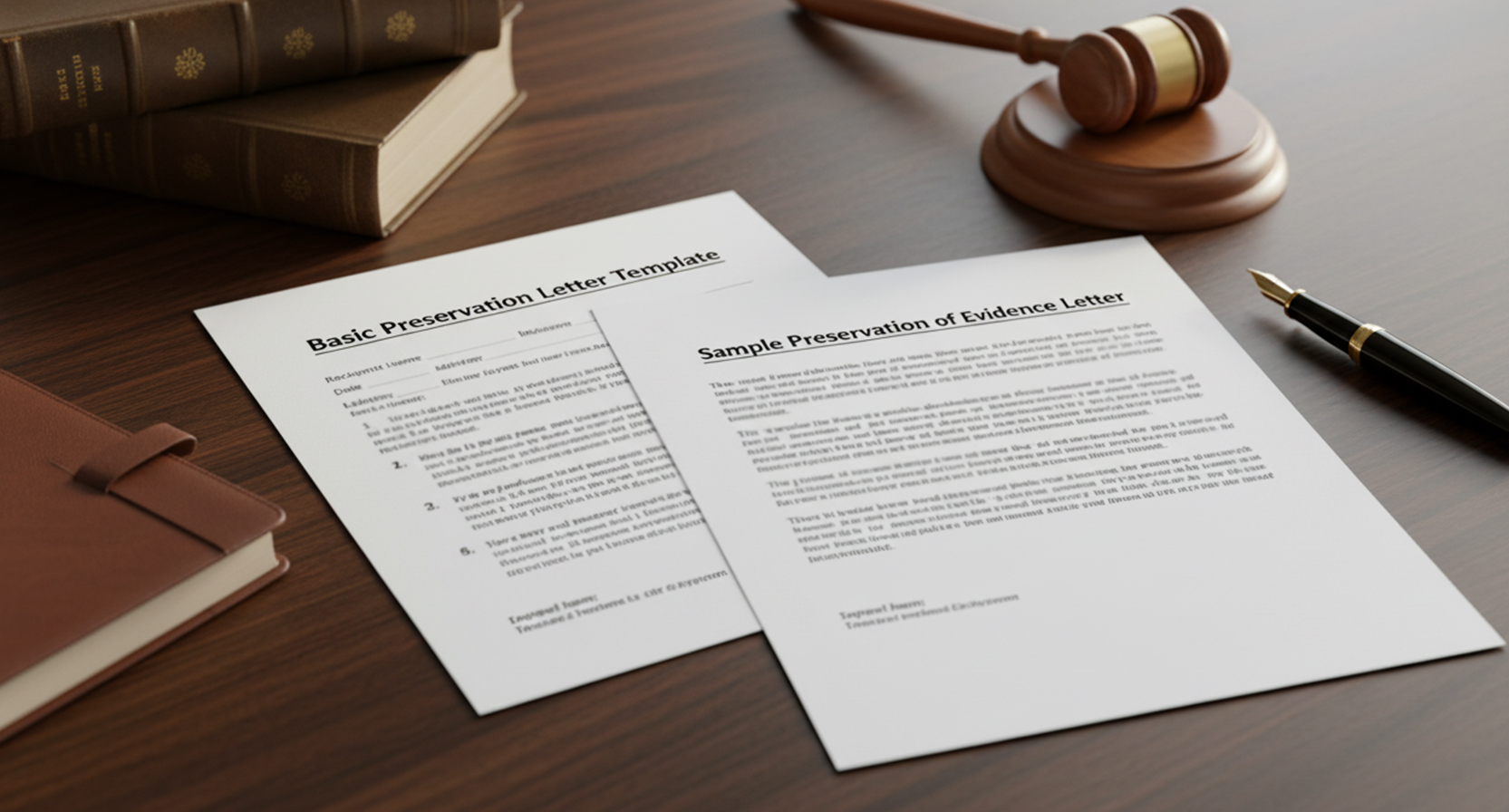
Basic Preservation Letter Template
[Your Name or Law Firm Name]
[Your Address]
[City, State, ZIP]
[Email Address]
[Phone Number]
Date: [Insert Date]
To: [Recipient Name / Company]
Address: [Recipient Address]
Subject: Preservation of Evidence Demand
Dear [Recipient Name],
This letter serves as a formal preservation of evidence notice regarding a legal dispute involving [brief description of incident or issue].
We anticipate litigation related to this matter. Therefore, you have a duty to preserve evidence that may be relevant to this case.
1. Preservation Demand
You are required to preserve all relevant documents, data, and materials in your possession, custody, or control.
This includes both physical evidence and electronically stored information (ESI).
2. Scope of Evidence to Preserve
Please preserve, without limitation, the following:
- Emails and electronic communications
- Text messages and chat logs
- Contracts, reports, and business records
- Photos, videos, and surveillance footage
- Cloud storage data and backup systems
- Any other relevant documents or materials
These items must not be deleted, altered, or destroyed.
3. Timeframe
This request applies to all records created or stored from:
[Start Date] to [End Date or Present]
4. Suspension of Deletion Policies
You must immediately suspend any routine document retention policies or automatic deletion systems that may result in the loss of relevant evidence.
5. Legal Consequences
Failure to preserve evidence may result in spoliation sanctions, including:
- Court penalties
- Adverse inference
- Monetary fines
- Other legal consequences
Courts may take action if evidence is destroyed after notice.
6. Request for Confirmation
Please confirm in writing that you have received this letter and that you will comply with this preservation demand.
7. Contact Information
If you have any questions, please contact:
[Your Name]
[Your Email]
[Your Phone Number]
Sincerely,
[Your Name]
[Your Title / Law Firm]
Sample Preservation of Evidence Letter
Below is a realistic sample preservation of evidence letter based on how lawyers draft spoliation letters in actual cases. This example shows how to apply the template in a real situation.
A sample like this helps you understand tone, structure, and legal wording used in practice.
Sample Letter
[Law Firm Name]
[Address]
[City, State, ZIP]
[Email]
[Phone Number]
Date: March 1, 2026
To: ABC Trucking Company
Address: 101 Main Street, City, State
Subject: Preservation of Evidence Notice – Motor Vehicle Accident
Dear Sir or Madam,
Our firm represents John Smith in connection with injuries sustained in a motor vehicle accident that occurred on February 10, 2026.
This letter serves as a formal preservation of evidence letter and places you on notice of your duty to preserve evidence related to this incident. Litigation is reasonably anticipated.
Preservation Demand
You are required to preserve all documents, records, and electronically stored information (ESI) that may be relevant to this matter.
You must not destroy, alter, delete, or modify any such evidence.
Evidence to Be Preserved
This request includes, but is not limited to:
- The vehicle involved in the accident
- All photos, videos, and surveillance footage
- Emails, text messages, and internal communications
- Driver logs, maintenance records, and inspection reports
- Personnel files and training records
- GPS data and vehicle black box data
- Any reports created after the incident
These categories reflect common evidence listed in real spoliation letter samples.
Timeframe
Please preserve all evidence from:
January 1, 2026, to Present
Suspension of Deletion Policies
You must immediately suspend any routine document retention or deletion policies that could result in the loss of relevant evidence.
Legal Consequences
Failure to preserve evidence may result in spoliation of evidence claims and legal penalties, including:
- Adverse inference instructions
- Monetary sanctions
- Case-related penalties or judgments
Request for Confirmation
Please confirm in writing within 10 days that you have received this letter and taken steps to preserve all relevant evidence.
Contact Information
If you have any questions, please contact:
[Attorney Name]
[Law Firm Name]
[Email] | [Phone Number]
Sincerely,
[Attorney Name]
Attorney for Plaintiff
Legal Consequences of Ignoring a Preservation Letter
Failing to respond to a preservation of evidence letter can lead to serious legal trouble. Courts take evidence preservation very seriously because it protects fairness in a lawsuit.
If a person or company fails to comply with a litigation hold letter, they may face severe penalties.
1. Spoliation of Evidence
The biggest risk is spoliation of evidence.
This happens when someone:
- Destroys evidence
- Changes or hides information
- Fails to preserve important data
Courts view this as a serious violation because it harms the discovery process and fairness in the case.
2. Adverse Inference Rule
One of the most powerful penalties is the adverse inference doctrine. This means that the court may assume the lost evidence was harmful to the party who destroyed it, and it can strongly affect the outcome of the case and damage credibility.
3. Monetary Penalties and Legal Costs
Courts can order the party at fault to pay:
- Fines
- Attorney fees
- Costs caused by the loss of evidence
Under Rule 37 of the Federal Rules of Civil Procedure (FRCP), courts can require payment for damages caused by failure to preserve evidence.
4. Loss of Legal Rights
If evidence is not preserved, courts may limit what a party can do in the case.
This can include:
- Blocking certain claims or defenses
- Preventing the use of key evidence
- Restricting witness testimony
In some cases, courts may treat certain facts as already proven against the party.
5. Case Dismissal or Default Judgment
In serious situations, the court may take extreme action, such as:
- Dismissing the case
- Entering a default judgment against the party
This means the case can be lost without a full trial.
6. Criminal Liability in Some Cases
In rare situations, destroying evidence can become a crime.
This is called evidence tampering, and it may lead to:
- Criminal charges
- Fines
- Even imprisonment
Some laws allow penalties of up to many years in prison for intentional destruction of evidence.
7. Damage to Reputation and Credibility
Even if the case is not dismissed, failing to preserve evidence can harm:
- Trust with the court
- Business reputation
- Future legal position
Judges and juries may view the party as dishonest or careless.
Why Courts Take This Seriously
Courts rely on complete and accurate evidence to make fair decisions.
When evidence is lost, it can:
- Change the outcome of the case
- Harm the other party
- Reduce trust in the legal system
That is why strict penalties exist under evidence law and civil procedure rules.
Preservation Letter vs Litigation Hold: What’s the Difference?
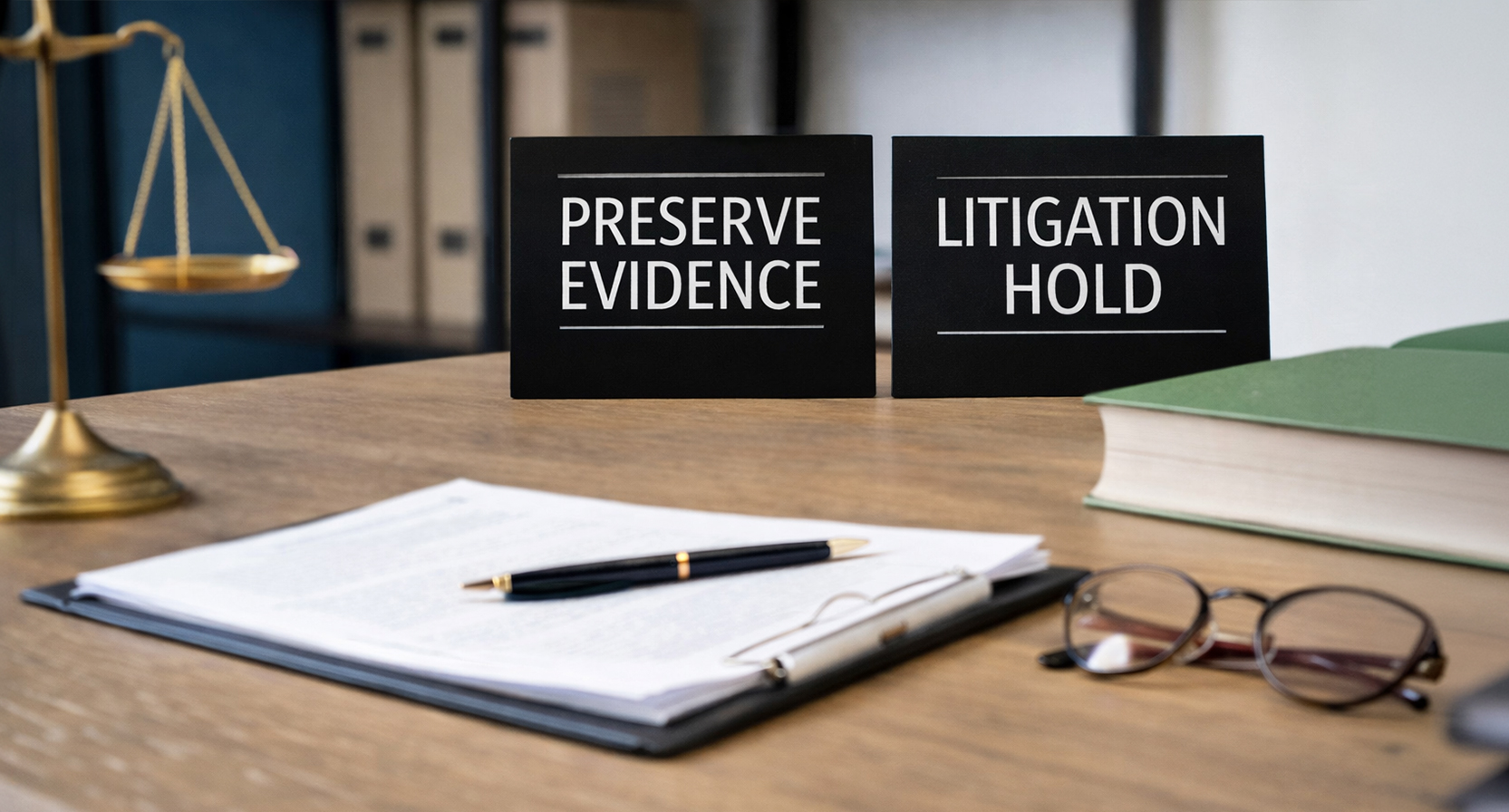
Many people think a preservation of evidence letter and a litigation hold are the same. They are related, but they are not exactly the same.
Understanding the difference helps you use the right tool at the right time.
Simple Explanation
- A preservation letter is sent to another party
- A litigation hold is used within your own organization
Both aim to preserve evidence, but they work in different ways.
What Is a Preservation Letter?
A preservation of evidence letter is an external legal notice.
It is sent to:
- The opposing party
- A third party holding evidence
Its purpose is to:
- Inform them of a legal dispute
- Ask them to preserve evidence
- Warn about spoliation of evidence
It is not always required by law, but it is a strong legal step to protect your case.
What Is a Litigation Hold?
A litigation hold is an internal process used by a company or organization.
It is sent by:
- Legal counsel
- Corporate legal department
It tells employees to:
- Stop deleting data
- Keep all relevant documents and ESI
- Follow data preservation rules
A litigation hold is a key part of eDiscovery and is required when litigation is expected.
| Feature | Preservation Letter | Litigation Hold |
| Who Receives It | External party (opposing party, third party) | Internal employees and departments |
| Type | External legal notice | Internal process/directive |
| Purpose | To notify an external party and request preservation of evidence | To enforce the duty to preserve evidence within the organization |
| Timing | Sent before or early in a dispute, often pre-litigation | Implemented internally when litigation is “reasonably anticipated.” |
| Legal Duty | A strong legal step, but not always required by law to send | The internal process required to satisfy the legal “duty to preserve evidence.” |
Timing Difference
- A preservation notice can be sent early, even before filing a case
- A litigation hold starts when litigation is reasonably anticipated and becomes mandatory
The duty to preserve evidence often begins before a lawsuit is filed.
Scope Difference
- A preservation demand letter asks another party to keep evidence
- A legal hold notice ensures your own team keeps evidence
A legal hold often covers:
- Emails
- Documents
- Text messages
- Internal systems
This process helps organizations stay compliant and avoid legal risk.
How They Work Together
These two tools are often used at the same time:
- You send a preservation letter to the other side
- You issue a litigation hold inside your organization
This ensures that:
- You protect your own evidence
- The other party also preserves theirs
Common Mistakes to Avoid
Writing a preservation of evidence letter may seem simple, but small mistakes can create big legal risks. Courts expect parties to take reasonable steps to preserve evidence, especially when litigation is expected.
Below are the most common mistakes and how to avoid them.
1. Sending the Letter Too Late
One of the biggest mistakes is waiting too long.
The duty to preserve evidence starts when litigation is reasonably anticipated, not when a lawsuit is filed.
If you delay:
- Evidence may be deleted
- Data may be overwritten
- Your case may weaken
Always send your preservation notice as early as possible.
2. Being Too Vague About Evidence
A weak preservation demand letter often uses unclear language, like:
- “Save all documents.”
This is not enough. Courts expect you to clearly define:
- Types of relevant documents
- Specific electronically stored information (ESI)
- Timeframes and categories
Failing to define the scope properly is a common preservation failure.
3. Not Including All Data Sources
Another mistake is failing to consider important sources of evidence.
A proper letter must include:
- Emails and messages
- Cloud storage and backups
- Personal devices used for work
- Physical records
Courts expect a broad and reasonable approach to identifying evidence.
4. Failing to Stop Auto-Deletion
Many systems delete data automatically.
If your legal hold notice does not clearly instruct to stop:
- Email deletion
- Backup overwrites
- File cleanup systems
Then, evidence may be lost without intent.
Failure to suspend deletion systems is a major risk in legal hold cases.
5. Poor Communication with Custodians
A litigation hold or preservation request must reach the right people.
Common mistakes include:
- Not informing employees
- Not including IT teams
- Not identifying key custodians
Poor communication can lead to missing or incomplete evidence.
6. Not Following Up
Sending a letter is not enough.
Preservation is an ongoing process, not a one-time task.
You must:
- Confirm receipt
- Monitor compliance
- Update the request if needed
Without follow-up, evidence may still be lost.
7. Ignoring Electronic Evidence Risks
Digital data is easy to lose.
Even normal computer use can:
- Change metadata
- Overwrite files
- Delete temporary data
Electronic evidence requires extra care to avoid spoliation of evidence.
8. Using a Generic Template Without Customization
A basic preservation letter template is helpful, but using it without changes is risky.
Every case is different. You must:
- Add specific facts
- Include exact evidence types
- Adjust timeframes
Generic letters are often ignored or challenged in court.
9. Not Explaining Legal Consequences
If your letter does not warn about:
- Spoliation sanctions
- Legal penalties
- Court consequences
The recipient may not take it seriously.
A strong warning improves compliance and protects your case.
FAQs (Frequently Asked Questions)
Below are simple answers to common questions about a preservation-of-evidence letter. These answers help users understand how it works in real legal situations.
Is a Preservation of Evidence Letter Legally Binding?
A preservation letter is a formal request, but it has a strong legal effect.
Once a person or company receives it, they are on notice of their duty to preserve evidence. If they ignore it and destroy evidence, courts can impose sanctions for spoliation.
Can I Send a Preservation Letter Without a Lawyer?
Yes, you can send a preservation notice yourself.
However, a lawyer can:
- Make the letter stronger and more precise
- Identify all relevant documents and ESI
- Reduce the risk of mistakes
Many people choose legal counsel to ensure proper wording and full protection.
When Should I Send a Preservation Letter?
You should send it when litigation is reasonably anticipated.
This can happen:
- After an accident
- After a contract problem
- When a dispute becomes serious
You do not need to wait for a lawsuit to begin.
Who Should Receive the Preservation Letter?
The letter is usually sent to:
- The opposing party or defendant
- Their insurance company
- Third parties holding evidence
This ensures all possible custodians of information preserve evidence.
What Happens If Evidence Is Destroyed?
If evidence is destroyed after notice, courts may:
- Apply adverse inference
- Impose fines or penalties
- Limit legal defenses
- Dismiss the case in serious situations
This is called spoliation of evidence, and it can strongly affect the outcome of a case.
How Long Must Evidence Be Preserved?
Evidence must be preserved for as long as the case is active.
This includes:
- Pre-litigation phase
- Discovery process
- Trial and appeals
The exact time depends on the case, but the duty continues until the legal matter is fully resolved.
What Types of Evidence Must Be Preserved?
A preservation demand letter usually covers:
- Emails and text messages
- Contracts and business records
- Photos and videos
- Cloud data and backups
- Physical items
The goal is to protect all relevant evidence in the case.
Is a Preservation Letter Required Before Filing a Lawsuit?
No, it is not always required.
However, it is highly recommended because it:
- Protects important evidence
- Strengthens your case
- Prevents data loss
Sending it early is a smart legal step.