
Texas Car Crash: Who Consents to Emergency Surgery?

Short answer: In a real emergency, often no one signs. Texas law lets doctors operate right away when a patient cannot speak, and the injury looks deadly. Nobody has to find a spouse first. Nobody has to call a parent. Once the crisis passes, the rules change. Then a set order kicks in. A health care agent comes first. Then a guardian. Then close family. This guide walks through each step in plain words.
Four Consent Paths, In Order
Texas doctors follow a clear medical consent hierarchy. It has four levels. They apply in order.
- The patient signs. This works only if the person has the capacity to consent to treatment.
- No one signs. This is the emergency exception to informed consent. It comes before family.
- An agent or guardian signs. This means a health care agent with authority under a medical power of attorney, or a court-appointed guardian, consents.
- A family surrogate signs. This is the surrogate consent priority list in state law.
Most people get this backward. They think family comes first. In a trauma bay, the emergency rule wins. Family matters most in the hours and days after that.
When No One Has to Sign at All
A Texas Car Crash Victim Unconscious at the Scene
Picture a bad wreck. A driver is slumped over the wheel. That is a traumatic brain injury, an unconscious driver in the eyes of the crew that arrives. EMS first responders begin treatment within minutes. Then they transport the patient by ambulance to the hospital.
Nobody at that scene stops to hunt for a signature. State law says they do not have to.
What Section 773.008 Says
The rule sits in the Texas Health and Safety Code, Section 773.008. This is part of the Emergency Health Care Act.
It says consent for emergency care is not required if the person is:
- Unable to communicate because of an injury, accident, or illness, or is unconscious, and
- Suffering from what reasonably appears to be a life-threatening injury or illness.
Read that word “and” closely. Both parts must be true. A motor vehicle accident trauma patient who is awake, alert, and talking does not fall under this rule. That person can still say no. The implied consent doctrine covers people who cannot speak for themselves. It does not cover people who simply disagree with the doctor.
Lawyers also call this the emergency doctrine medical treatment rule. Some call it presumed consent unconscious patient care. The idea is simple. We assume a reasonable person would want to be saved.
Two More Ways the Rule Applies
Section 773.008 has two other parts:
- A court order for emergency treatment can authorize care. A court of record may order it when an imminent emergency exists, and there is a risk of serious bodily injury or loss of life.
- A child can also be treated with no signature. The injury must look deadly. And no parent, conservator, or guardian can be present.
How This Works Inside the Hospital
Section 773.008 covers the field and the ride in. Inside the building, a second law matters. That law is the Texas Civil Practice and Remedies Code. The key part is Chapter 74, and people call it the Texas Medical Liability Act.
Chapter 74 sets the rules for informed consent doctors must follow in Texas. Normally, a doctor must disclose risks and hazards before a listed procedure. That is the Section 74.104 duty of disclosure.
But there is a safety valve. It is the Section 74.106 effect-of-disclosure rule. A failure to warn may not be negligent if an emergency existed. The same is true if a warning was not possible.
That is a defense. It is not a blank check. The attending physician’s documentation of incapacity still matters. So does having the consent documented in the medical record, or a clear note about why consent was not possible.
Time-Critical Operations After a Crash
Some injuries cannot wait. A time-sensitive surgical intervention may be needed in minutes. Life-threatening injuries after a wreck often include:
- An internal bleeding emergency called laparotomy to find and stop bleeding in the belly
- An emergency craniotomy when pressure on the brain must be relieved
- Spinal injury emergency surgery to guard the spinal cord
- A blood transfusion consent emergency, when blood loss is severe
- An emergency amputation consent case, when a limb cannot be saved
You may have heard about golden hour trauma care. It is the first hour after a crash that often decides the outcome. Waiting for a phone call can cost a life. That is why the law bends here.
Where This Care Happens
Texas has a strong trauma network. The Texas Department of State Health Services helps run the state trauma system. It also sets Texas EMS rules. The American College of Surgeons checks trauma programs across the country.
A patient may end up at the following Level I trauma centers in Texas::
- Parkland Memorial Hospital in Dallas, Texas
- Ben Taub Hospital and Memorial Hermann Texas Medical Center in Houston, Texas, both in Harris County, Texas
- University Hospital, San Antonio, serving San Antonio, Texas
- JPS Health Network in Fort Worth
Several sit inside the Texas Medical Center. It is the world’s largest medical complex. Teams there follow Advanced Trauma Life Support (ATLS) steps. They also score alertness with the Glasgow Coma Scale. A low score strongly indicates that a patient cannot consent.
Federal law adds a floor. The EMTALA screening and stabilization duty covers every emergency patient. It applies no matter who pays. The Centers for Medicare & Medicaid Services and the U.S. Department of Health and Human Services enforce it. The Joint Commission also checks how hospitals handle consent.
Who Can Sign When There Is Time

Once the patient is stable, the picture changes. Now the hospital needs a legally authorized representative. Someone must handle consent to emergency surgery Texas rules require for the next steps.
So who signs the surgical consent form at this point?
A Medical Power of Attorney Beats Everyone
The Texas Advance Directives Act sits in Health and Safety Code Chapter 166. It created the Texas medical power of attorney form.
This document is a designation of a health care agent. Older paperwork may call it a durable power of attorney for health care. Either way, it names one adult to make health decisions if you cannot.
If a valid form exists, that agent outranks every relative. A court-appointed guardian consent also outranks the family list. A guardian of the person Estates Code judges appoint holds that power. Guardianship runs through the Texas Estates Code.
The Family List Under Section 313.004
If there is no agent and no guardian, the hospital turns to the Texas Consent to Medical Treatment Act. You will find it at Health and Safety Code Chapter 313.
Here is the Section 313.004 surrogate list, in order:
- Spouse consent for surgery. The husband or wife comes first.
- An adult child who has the waiver and consent of all other qualified adult children.
- A majority of the patient’s reasonably available adult children. This is the adult children consent majority rule.
- The patient’s parents consent right.
- The person the patient named before losing capacity. Or the nearest living relative consent choice. Or member of the clergy consent.
That fifth level surprises people. A pastor really can appear on the list. The rule exists so a patient with no family still has a voice.
This is what people mean by surrogate decision-maker Texas law. It is also what hospital staff mean when they ask for next of kin Texas hospital contact details.
Three Steps the Doctor Must Take First
The family list does not switch on by itself. Section 313.005 prerequisites for consent sets out real duties.
- The attending physician must write the patient’s state in the chart. That covers the coma or the loss of speech.
- The doctor must write the planned treatment in the record.
- The doctor must make a reasonably diligent inquiry to locate family. Each attempt goes in the chart.
There is also a paperwork rule. A surrogate may agree by phone. A staff member then writes it down and signs it. The surrogate signs later.
A decision-making capacity assessment guides all of this. Capacity is not the same as a diagnosis. It means the person can grasp the choice and what follows.
What a Surrogate Cannot Do
There are real limits on surrogate authority. Chapter 313 blocks a surrogate from agreeing to some things. Withholding life-sustaining treatment falls under Chapter 166 instead.
A surrogate also has a duty. Their choice must match what the patient would have wanted, if that is known. Ethics writers call this the substituted judgment standard. When nobody knows the patient’s wishes, the best interest standard medical decisions rule applies instead.
The American Medical Association Code of Medical Ethics explains both ideas. So do notes from the American College of Emergency Physicians.
What If the Family Disagrees?

A family disagreement over surgery is common. Stress is high. People are scared.
Texas has a narrow answer. Say there is a dispute among surrogate decision-makers about who may act. Only a court can settle it. That court must have power under Title 3 of the Texas Estates Code. A hospital cannot referee it. A nurse cannot pick a winner.
In practice, three things help:
- A hospital ethics committee consultation can bring people together fast.
- A judge can grant an emergency temporary guardianship when time allows.
- If the patient’s life is truly at risk, the emergency rule takes over anyway.
Note who is missing from the list. A partner who is not married has no automatic rights here. Unmarried partner medical decisions only work with a signed medical power of attorney. That is the single strongest reason to fill one out.
The HIPAA Privacy Rule lets staff share news with people involved in a patient’s care. But sharing news is not the same as giving consent. Those are two different things.
If the Crash Victim Is a Child
Consent for minor car accident victim care has its own rules. They live in Texas Family Code Chapter 32. Many children reach the emergency room after a car accident with no parent beside them.
Parents come first. So does a managing conservator consent right.
But what about a parent unreachable after accident cases? That is where Section 32.001 consent by non-parent comes in. When the person with the right to consent cannot be contacted and has not objected, these people may consent:
- Grandparent consent for child treatment is first on the list
- An adult sibling consent for a minor option, meaning an adult brother or sister
- An adult aunt or uncle
- A school the child attends, with school written authorization to consent
- An adult with actual care and control of the child, plus written authorization
- A court with jurisdiction over a suit affecting the parent-child relationship
- An adult responsible for a child under juvenile court jurisdiction
- A peace officer who has lawfully taken custody of the minor. The officer must have good reason to think the child needs care right away
That last one deserves attention. It rarely appears in articles about child injured in a crash surgery situations. Yet it matters a lot at a roadside wreck. A Texas Department of Public Safety trooper may be the only adult there with the child.
Foster child medical consent DFPS rules apply to kids in state care. The Texas Department of Family and Protective Services follows other parts of the Family Code.
Some teens can sign for themselves. Emancipated minor medical consent works when a court has freed the teen from minor status. Family Code Section 32.003 also helps a minor 16 living apart from parents. That teen may consent if they manage their own money.
And remember Section 773.008. A child with a life-threatening injury can be treated when no parent or guardian is present.
When Consent Still Matters in an Emergency
The emergency rule is strong. It is not absolute.
- An advance directive on file can change the plan. So can a valid out-of-hospital DNR order.
- A do not resuscitate order trauma team members can actually see will be honored.
- A patient refusal of blood transfusion may be respected if it was clearly stated in advance. A Jehovah’s Witness surgery refusal is the best known example.
- A religious objection to treatment carries weight when it is documented and known.
- Revoking consent for surgery is the patient’s right once capacity returns.
Here is the hard truth. A wish nobody can see rarely changes anything. A wallet card, a card in a phone case, or a document in a hospital chart is what works. A belief nobody knew about will not stop a trauma team.
Where These Rules Came From
Consent law grew from court cases, not just statutes.
- Schloendorff v. Society of New York Hospital (1914) set the base rule. Every adult of sound mind may decide what happens to their own body.
- Moss v. Rishworth is the classic Texas case. A doctor operated on a child. There was no parent consent and no emergency. The doctor could be sued.
- Canterbury v. Spence (1972) shaped today’s duty to warn about risks.
- Cruzan v. Director, Missouri Department of Health (1990) backed the right to say no to care.
Congress later passed the Patient Self-Determination Act. It pushed hospitals to ask patients about advance directives. Many states adopted the Uniform Health-Care Decisions Act. Texas went its own way and wrote Chapters 166 and 313 instead.
The Texas Legislature has amended these laws many times. The Supreme Court of Texas and the Texas Courts of Appeals still rule on them. The State of Texas publishes the current text online for free.
Consent Problems and Legal Claims
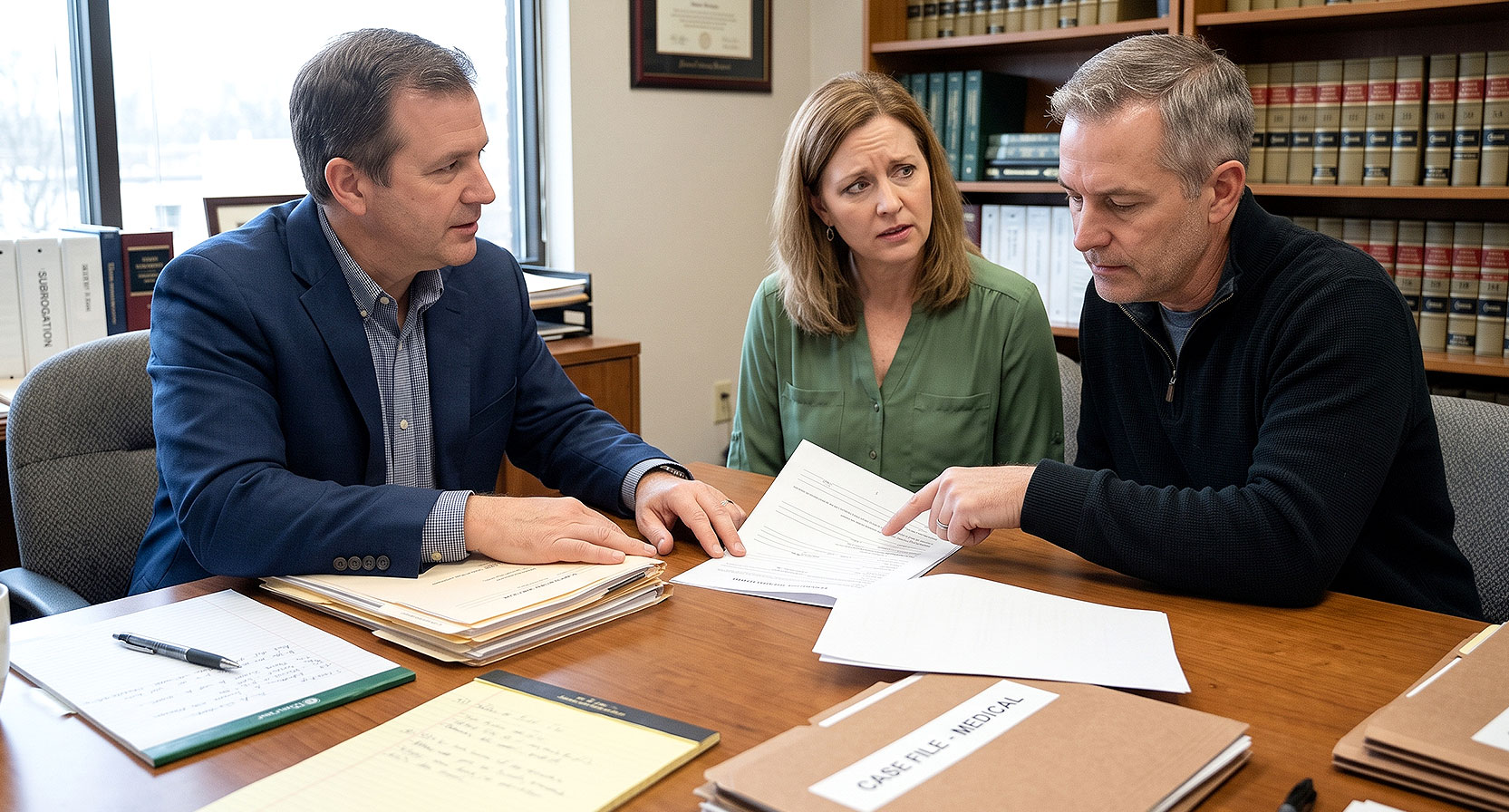
Some families later ask a hard question. Was that surgery even allowed?
Be honest with yourself here. Most of these claims fail. The emergency defense is strong, and juries understand it.
Still, real cases exist. Here is how they work.
The Claim Types
A medical malpractice lack of informed consent case says the doctor failed to warn about risks. A battery unauthorized surgery claim goes further. It says no valid consent existed at all. There can also be hospital liability for consent failure. That fits when staff skipped required steps.
All of these count as a health care liability claim Texas law treats under Chapter 74.
The Disclosure Panel
The Texas Medical Disclosure Panel decides which risks a doctor must share. It works under the Texas Health and Human Services Commission.
Say a doctor skips required risks for a Texas Medical Disclosure Panel List A procedure. The law then creates a rebuttable presumption of negligence informed consent cases rely on. The jury hears about it. The doctor then must present evidence to push back.
The Hurdles
Chapter 74 makes these cases hard on purpose.
- The Chapter 74 expert report requirement means you must serve an expert report early. Miss it, and the case is tossed out.
- Texas applies a two-year statute of limitations to health care claims. Waiting is dangerous.
- Texas juries must follow a noneconomic damages cap. It limits pain and suffering awards.
- For emergency care in an ER, you must show willful and wanton negligence in emergency care conduct. Ordinary negligence is not enough.
- Good-faith emergency care immunity also applies. It shields people who step in to help.
Proving damages from surgical complications takes real medical proof. You need records, scans, and an expert. That expert must link the harm to the care.
The Texas Occupations Code licenses doctors. The Texas Medical Board sets their rules. You can file a complaint there. That is separate from any lawsuit. Three groups publish helpful background here. They are the Texas Medical Association, the Texas Hospital Association, and the Texas Trial Lawyers Association.
Who Pays for the Emergency Surgery?
This is the next question families ask. Medical bills after emergency surgery arrive fast, and they are large.
A personal injury claim after car crash losses may cover them. So may health insurance. Crash reports from the Texas Department of Public Safety help. Crash data from the Texas Department of Transportation also helps.
Hospital Liens
The Texas hospital lien statute sits in Chapter 55 of the Property Code. Key points:
- The patient must be admitted within 72 hours of the accident for a hospital lien to attach.
- The lien covers hospital charges for the first 100 days of hospitalization.
- It can also cover a doctor’s emergency charges from the first seven days.
- An EMS lien is capped. It covers only the 72 hours after the crash.
A lien attaches to your claim, not your house. It gets paid out of a settlement.
Other Payment Tools
A letter of protection medical treatment deal lets a doctor treat you now. The doctor waits for payment from a future settlement. Read the terms with care.
You can send some billing complaints to the Office of the Texas Attorney General.
How to Plan Ahead
You cannot control a wreck. You can control who speaks for you.
- Fill out a medical power of attorney. The statutory form appears at Section 166.164.
- Name a first-choice agent and a backup.
- Give copies to your agent, your doctor, and your hospital.
- Keep a card in your wallet that says you have an agent and how to reach them.
- Talk to your agent about what you would want. That makes their job possible.
Ten minutes of paperwork solves most problems in this article.
Frequently Asked Questions
Can a girlfriend or boyfriend consent to surgery in Texas?
No, not on their own. An unmarried partner is not on the Section 313.004 list. A partner can decide only with a signed medical power of attorney. Without that form, the hospital moves down the family list.
Can a hospital operate on my husband without my permission?
Yes, in a true emergency. Say he cannot speak and his injuries look deadly. Then consent is not required under Section 773.008. Once he is stable, you move to the top of the list as his spouse. The hospital should include you in later choices.
Does a spouse outrank adult children?
Yes. Under Section 313.004, the spouse is first in line. Adult children come next. If the spouse cannot or will not act, the hospital moves to the children in order.
What if I live out of state and cannot get there?
Distance does not remove your place in line. A surrogate may consent by phone. Staff write that consent into the chart and sign it. You sign it too, as soon as you can.
Can I refuse surgery for my adult child?
Only if you are the right decision maker and there is no emergency. A spouse outranks a parent. And if the injury is deadly, doctors may act anyway.
Does the ER need consent for a CT scan?
Usually not during an emergency. Scans are part of stabilizing a patient. Consent rules matter most for major operations with serious risks.
Talk to Someone Who Knows These Rules
Was a family member hurt in a wreck? A Texas car accident attorney consultation can help you sort out what happened. Bring the medical records, the crash report, and any consent forms you signed. Most first meetings cost nothing. The two-year deadline makes early advice smart.