
Personal Injury Settlement Agreement Template
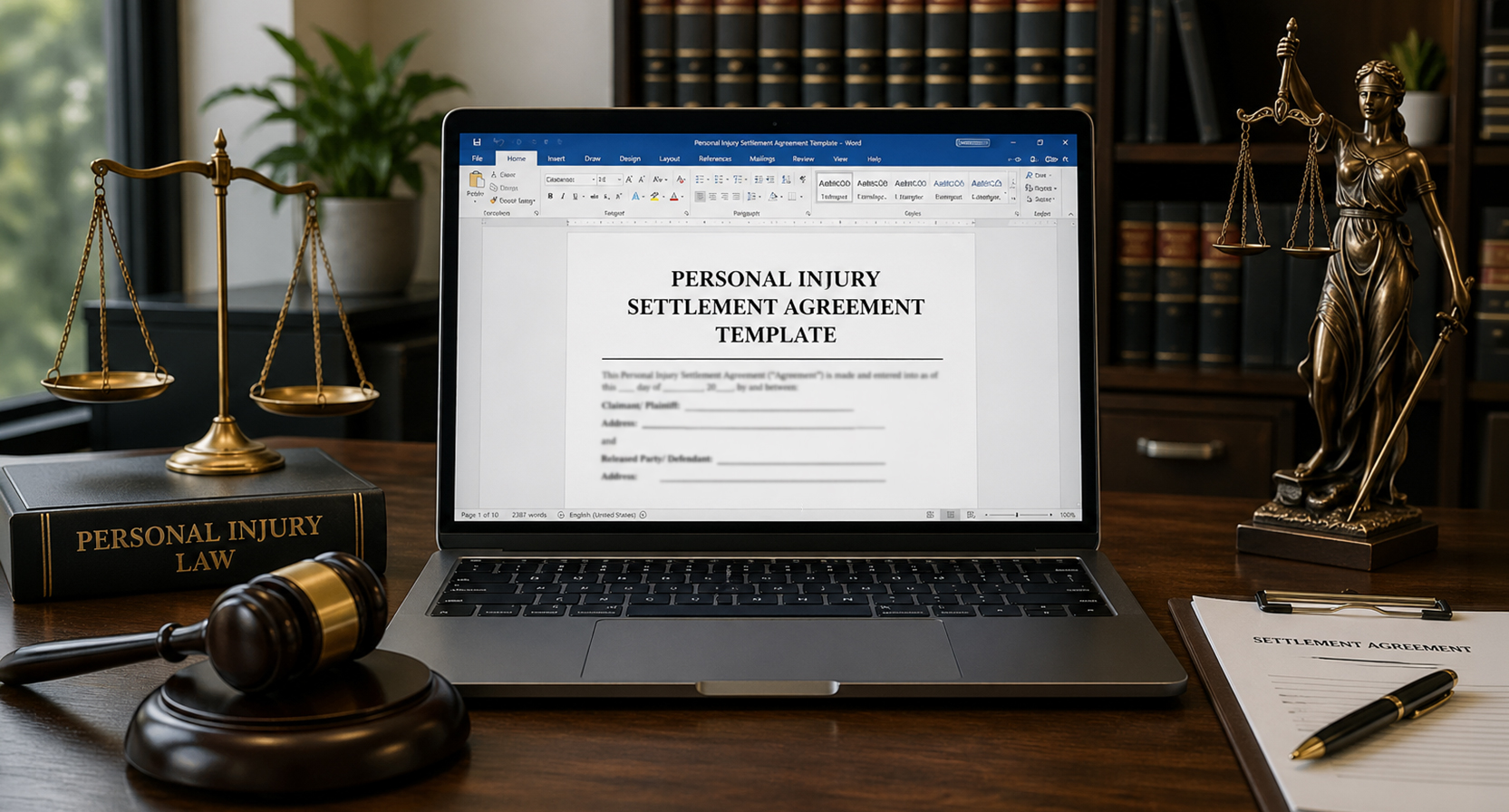
A personal injury settlement agreement template is a simple legal contract used to resolve a dispute arising from an injury. It helps both sides agree on a fair payment and avoid going to court. This type of settlement agreement is common in personal injury, civil, and tort law cases.
A personal injury happens when someone is hurt in body or mind due to another person’s actions. This can include car accidents, workplace injuries, or medical malpractice. The injured person, also called the claimant or plaintiff, may ask for financial compensation for medical expenses, lost income, and other damages.
What Is a Personal Injury Settlement Agreement?
A Personal Injury Settlement Agreement is a legal contract that helps the parties resolve a personal injury claim without going to court. It is made when a person who is hurt agrees to stop the lawsuit in return for money from the person responsible or their insurer. In the agreement, the claimant or plaintiff agrees not to seek additional compensation for the same incident.
This written settlement agreement lays out the terms both sides agree on. It names the people involved and says how much money the injured person will get. It also includes details on how and when the payment will be made, as well as which claims are being released.
Using a Personal Injury Settlement Agreement Template makes it easier to write this contract. A template offers a ready-made legal form you can customize to match your case. It helps ensure you include important parts such as the release of claims, the settlement amount, and other key terms.
A personal injury case often starts when someone is harmed and wants compensation for medical bills, lost wages, or pain and suffering. Instead of waiting for a judge or jury, both sides may agree to a settlement. This can save time, reduce stress, and give both sides a clear outcome.
A good template will also include spaces for names, the incident summary, and details about how the agreement works. This helps both parties understand their obligations and what is expected of them.
Key Sections of a Personal Injury Settlement Agreement
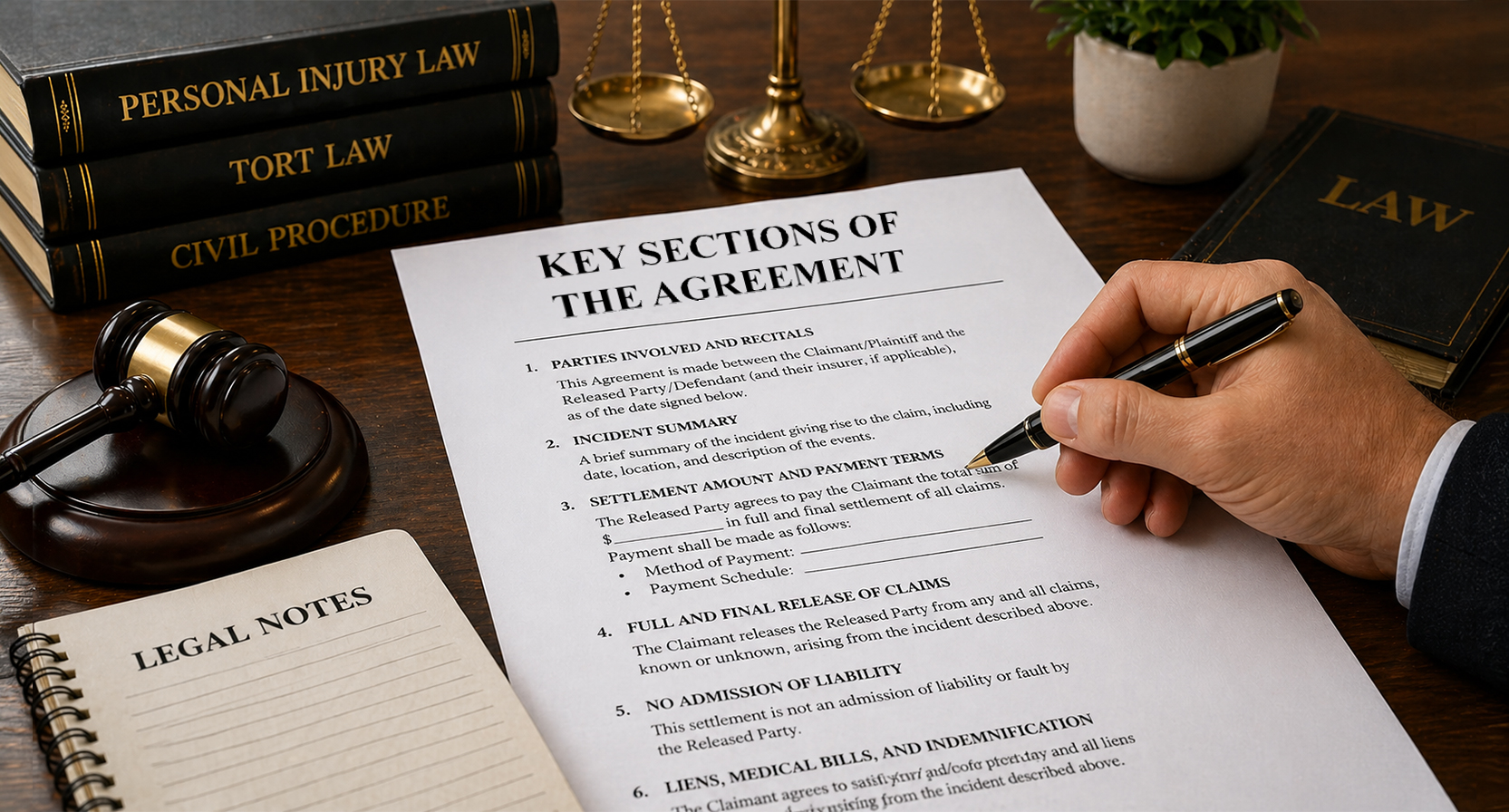
A Personal Injury Settlement Agreement Template should include clear provisions outlining what both parties agree to. A good agreement explains the payment terms, the release of claims, and how the document works for everyone involved.
Parties Involved and Recitals
The first part of a personal injury settlement agreement names the claimant/plaintiff and the released party/defendant (and their insurer). This section should list full names and addresses so it is clear who is a party to the agreement. A short incident summary explains where and when the injury happened.
Settlement Amount and Payment Terms
This section states the settlement amount that the injured person will receive in exchange for giving up future claims. It also explains the payment schedule and whether the money is paid as a lump sum or in smaller installments (for example, under structured settlement terms).
Full and Final Release of Claims
The release-of-claims clause states that the injured person agrees not to sue again for the same incident. It may cover all possible claims, even ones the injured person does not yet know about, as allowed by law. This helps protect the released party/defendant and their insurer from additional legal requests later.
No Admission of Liability
This section makes clear that the settlement is not an admission of liability or fault by the person paying the settlement. It confirms that the payment is only to end the dispute, not to show fault.
Liens, Medical Bills, and Indemnification
A well-drafted agreement also deals with any liens and medical expenses that must be paid from the settlement funds. It may explain who is responsible for these bills and if the injured party must protect the released side from future demands.
Taxes and Financial Consequences
This part tells the injured person they are responsible for any tax implications that come from receiving the settlement money and to seek help from a tax professional if needed.
Optional Clauses to Include
Some agreements also include clauses such as confidentiality (to keep settlement terms private) or non-disparagement (to prevent negative comments after settlement). These are optional and depend on what both sides want.
Governing Law and Signatures
At the end, the agreement should state the governing law and jurisdiction (which state’s rules apply) and include space for all parties to sign and date the document, making it legally binding.
How to Fill Out the Template
To complete your Personal Injury Settlement Agreement Template, add the necessary information step by step so the agreement is clear and complete. A well-filled template shows the parties involved, the amount paid, and that the injured person gives up future claims after the incident.
1. Put in the Parties’ Names and Details
Start by writing the full legal names and contacts for both sides:
- The claimant/plaintiff who was injured.
- The released party/defendant or their insurer if insurance is paying.
Include street address, city, and any policy number or claim number you have.
2. Add the Incident Summary
Write a short but clear incident summary that explains:
- When and where the injury happened.
- What type of event caused the injury, like a car accident or a slip and fall?
This gives context to the rest of the agreement.
3. Describe the Settlement Amount and Payment Terms
Next, write the settlement amount that both sides agreed on. Say whether it is a lump-sum payment or will be paid in parts (for example, in a structured settlement with scheduled payments). You should also note how and when the money will be paid (by bank transfer, check, or to a law firm trust account).
4. Include the Release of Claims Language
The template will have a section for the full and final release of claims. This states that the claimant agrees not to sue again for the same injury or accident after the settlement payment is made. This part must be clear so the released party is protected from future legal actions.
5. Add “No Admission of Liability”
In this section, state that paying the settlement money is not an admission of liability or fault by the defendant or insurer. This means the payment ends the claim, not to say someone was wrong.
6. List Out Liens, Medical Bills, and Indemnification
If there are any bills or liens (like medical bills still owed or claims from a health plan), include who is responsible for paying them. Some templates allow you to write that the claimant will use part of the settlement money to pay these bills.
7. Optional Parts to Add
Some templates let you include confidentiality terms or no-disparagement language if both sides want to keep the settlement private or agree not to speak negatively about each other later. These parts are optional and depend on your case.
8. Signatures and Date
Finally, every person in the agreement should sign and date the form. This makes the settlement agreement legally binding. If you are filling it out online, you can use tools that let you add an e-signature.
Sample Personal Injury Settlement Agreement Template
PERSONAL INJURY SETTLEMENT AGREEMENT AND RELEASE
This Agreement is made on [DATE] between:
CLAIMANT / PLAINTIFF:
Name: _________________________________
Address: _______________________________
RELEASED PARTY / DEFENDANT (and INSURER if applicable):
Name: _________________________________
Address: _______________________________
Policy Number: __________________________
Claim Number: __________________________
1. Background
On or about [DATE OF INCIDENT], the Claimant was injured in an incident at [LOCATION]. The Claimant alleges medical expenses, lost wages, pain and suffering, and other losses related to the incident.
2. Settlement Payment
In exchange for the agreements below, the Defendant (or its insurer) agrees to pay the Claimant a total of $ [SETTLEMENT AMOUNT].
2.1 Amount: $ ____________________________ (in words: ____________________________________)
2.2 Payment Method: (choose one)
☐ Lump sum payment within ___ days after this Agreement is signed.
☐ Structured payments as set out in an attached payment schedule.
2.3 Payment will be made to: ________________________ (for example, law firm trust account or Claimant directly).
3. Full and Final Release of Claims
In return for the payment above, the Claimant, on behalf of themselves and their heirs and assigns, fully and forever releases the Defendant and its insurers from all claims, injuries, demands, actions, and liabilities related to the Incident described above. This release covers all claims known and unknown to the Claimant at this time.
4. No Admission of Liability
The Defendant and its insurers deny any fault or liability for the Incident. This Agreement is made only to settle disputed claims and should not be used as an admission of liability.
5. Liens, Medical Bills, and Indemnification
The Claimant agrees they are responsible for any valid medical liens, subrogation interests, or outstanding bills related to the Incident, unless otherwise stated here:
(Use additional pages if needed)
6. Optional Terms (if needed)
Confidentiality: Both parties agree not to disclose the terms of this Agreement.
Non-Disparagement: Parties agree not to make negative statements about each other after settlement.
(Write in any optional terms you want to include.)
7. Governing Law
This Agreement is governed by the laws of [STATE / PROVINCE], and any disputes will be resolved in that location.
8. Signatures
By signing below, the parties acknowledge and accept all terms of this Agreement.
Claimant / Plaintiff Signature: ____________________________
Date: ____________________________
Defendant / Released Party Signature: _______________________
Date: ____________________________
Insurer (if applicable) Signature: __________________________
Date: ____________________________
Best Practices & Legal Considerations
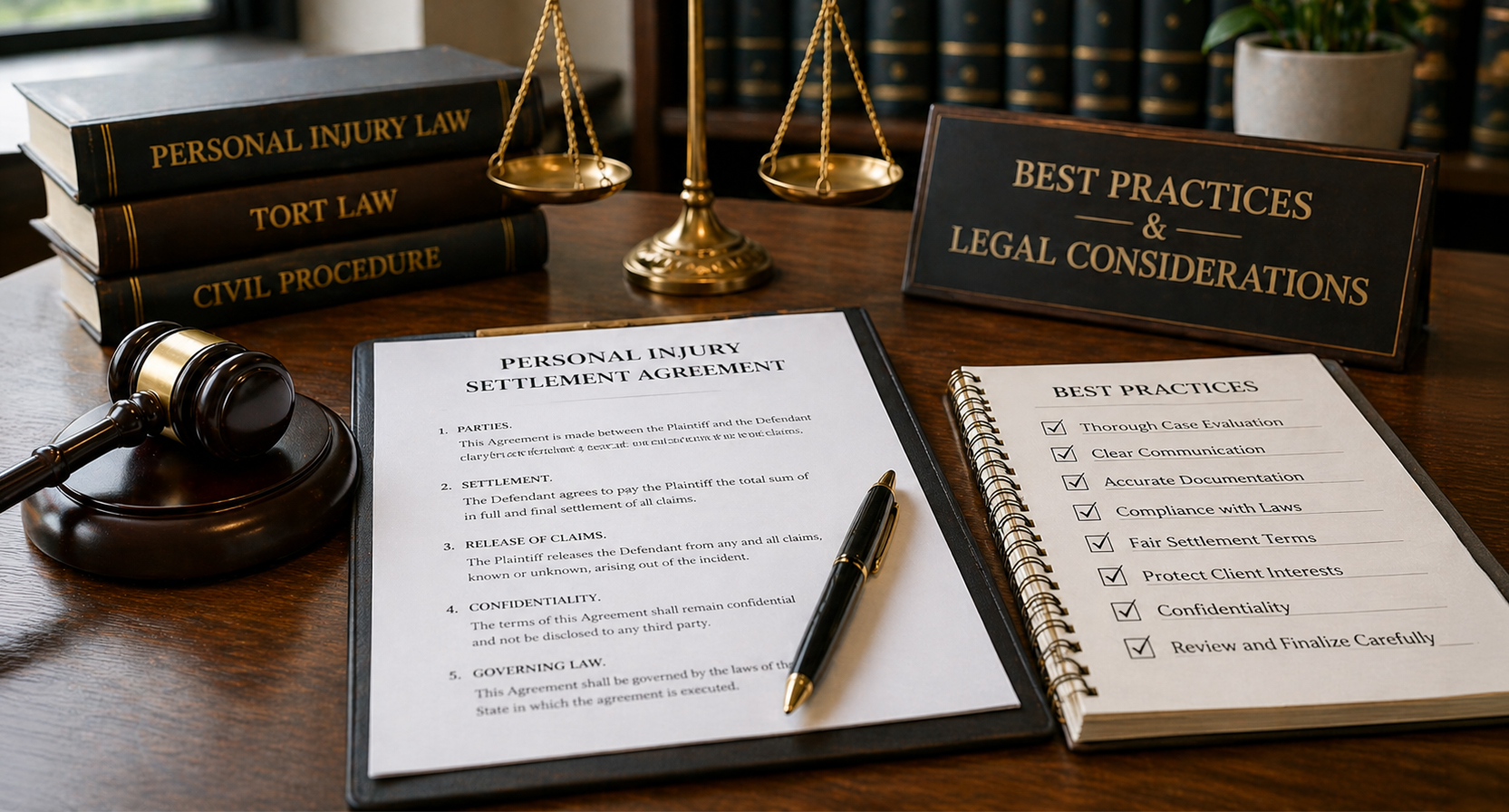
It is important to follow best practices and consider legal issues to ensure the agreement works well and protects you. A personal injury settlement generally helps end a claim without a trial by having the injured person and the other side agree on terms and a release of claims, provided the settlement is clear, complete, and fair.
Use Clear and Complete Language
Make sure the terms in the agreement are written clearly so both sides know what they agreed to. The settlement amount, payment schedule, and the process for releasing claims should be easy to read and understand. Clear language helps avoid confusion and future disputes.
Protect Legal Rights
A personal injury settlement must comply with basic contract law principles to be legally enforceable. It should show that both sides agreed freely, that there was an offer and acceptance, and that something of value (such as money) was promised in exchange for giving up the right to sue again. Having these elements helps make the agreement legally binding.
Think About Governing Law
Different states may have rules about how settlements must be written to be valid. The governing law and jurisdiction clause tells which state’s rules apply if there is a dispute later. This helps both the claimant/plaintiff and the released party/defendant know where to go if enforcement is needed.
Include Key Legal Clauses
Good templates include important legal parts such as:
- No admission of liability language so payment does not mean fault.
- Confidentiality terms for parties who want to keep the details private.
- A full release of claims, so the injured person gives up future legal rights about the same incident.
These help ensure the document meets legal requirements and avoids problems later.
Consider a Structured Settlement
Sometimes payments are not made in a single lump sum but instead through a structured settlement with scheduled payments over time. This can help manage money and may have tax or long-term planning benefits.
Get Professional Help When Needed
While templates are useful, personal injury agreements can involve complex issues such as tax implications, liens, and medical bills. A personal injury lawyer or legal professional can help review the settlement to make sure it meets legal standards and protects your rights.
Check for Enforceability
A properly drafted settlement is more likely to be enforced if one party fails to comply. To ensure your agreement is enforceable, include clear terms on how disputes will be handled and which law governs the contract.
Avoid Common Mistakes
Some common errors include omitting important terms, using vague language, or failing to specify payment deadlines. Taking time to review the agreement carefully can help prevent issues later.
Frequently Asked Questions (FAQs)
What is a Personal Injury Settlement?
A personal injury settlement is an agreement between the injured person (the claimant/plaintiff) and the at-fault party or their insurer that ends the legal case without a trial. In exchange for money, the injured person agrees not to sue for the same injury again.
Why Do People Choose a Settlement Instead of a Trial?
Most people choose a settlement because it is faster, less risky, and less costly than going to court. A trial can take a long time and may not pay anything if the injured person loses. A settlement gives both sides a clear end to the case.
What Is Included in a Settlement Agreement?
A Personal Injury Settlement Agreement Template usually includes:
- The settlement amount to be paid.
- How and when the payment is made (lump sum or structured settlement).
- A full and final release of claims, which means the injured person gives up the right to sue later.
- Optional terms such as confidentiality or how to handle liens and medical bills.
How Is a Settlement Amount Decided?
The amount in a personal injury settlement depends on many things, such as:
- The cost of medical care and future treatment.
- Lost wages from missed work.
- Pain and suffering or emotional distress.
These are often calculated during negotiations between lawyers and insurance companies.
Can I Reject a Settlement Offer?
Yes. You can say no to any offer and keep talking with the other side to try to get a better deal. If you still cannot agree, you can choose to go to court rather than accept a settlement.
How Long Does It Take to Get a Settlement?
The time to complete a personal injury settlement varies. It can take a few months or longer, depending on the severity of the injury and the complexity of the negotiations.
Is My Settlement Taxed?
In many cases, compensation for physical injury is not taxed, but parts of a settlement (like lost wages) might be. It depends on how the payment is structured and local tax rules.
Do I Need a Lawyer to Use a Template?
You do not always need a lawyer to fill out a Personal Injury Settlement Agreement Template, but a personal injury lawyer can help you make sure the agreement is fair, legal, and includes all important terms.