
Medical Lien Reduction Letter Samples for Personal Injury Claims

When you deal with a personal injury claim, you may expect to receive full injury compensation for your losses. But many people are surprised when a medical lien reduces their final payout. A medical lien is a legal claim that allows a hospital, physician, or insurance company to get paid from your settlement proceeds for the care you received.
This means your personal injury settlement is not fully yours until all medical expenses and lien holder claims are resolved. In many cases, a healthcare facility, rehabilitation clinic, or even Medicare, Medicaid, or an ERISA plan may request payment from your case settlement. These claims can come from a medical provider, a billing department, or a subrogation department seeking reimbursement for treatment.
The good news is that you can often reduce these costs. A medical lien reduction letter is a powerful tool used in lien negotiation. It helps you or your personal injury attorney ask for a lower amount, so you can keep more of your settlement. In fact, reducing liens can make a big difference in your final compensation.
What Is a Medical Lien Reduction Letter
A medical lien reduction letter is a type of legal correspondence used to request a lower payment on a medical lien. It is often included in a settlement negotiation letter sent by a law firm or by a claimant in a personal injury claim.
To understand this, you first need to know what a medical lien is. A medical lien is a legal claim placed on your injury compensation to make sure a medical provider, health insurer, or third-party payer gets paid for treatment. These liens are common in cases such as car accidents, wrongful death claims, or other liability claims.
When you receive care from a hospital, emergency room, surgical center, or trauma center, you may not pay right away. Instead, the provider may file a lien and wait for payment from your settlement proceeds. This is why liens must be resolved before you receive your final settlement check.
This letter is often prepared by a plaintiff’s attorney or settlement negotiator, but you can also write it yourself using a lien-reduction template.
How Medical Liens Affect Your Personal Injury Settlement
When you get a personal injury settlement, you do not always keep all the money. A medical lien can take a share of your settlement proceeds before you receive your final payment.
A medical lien is a legal claim that lets a hospital, doctor, or insurance company get paid from your case. It is their way to recover the cost of your medical treatment
Who Can Place a Lien
Many parties can place a lien on your personal injury settlement, such as:
- Hospitals and medical providers
- Health insurance companies
- Government programs like Medicare and Medicaid
- Other treatment providers linked to your injury
How It Reduces Your Money
A lien is paid first from your settlement fund. This means your final injury compensation is lower.
Why Lien Reduction Matters
Many liens can be negotiated. Lowering the lien helps you keep more money. In fact, reducing medical liens can make a big difference in what you take home
In simple terms, if you do not manage your liens, you may lose a large part of your settlement. That is why using a lien reduction letter is so important.
Key Elements of an Effective Lien Reduction Letter
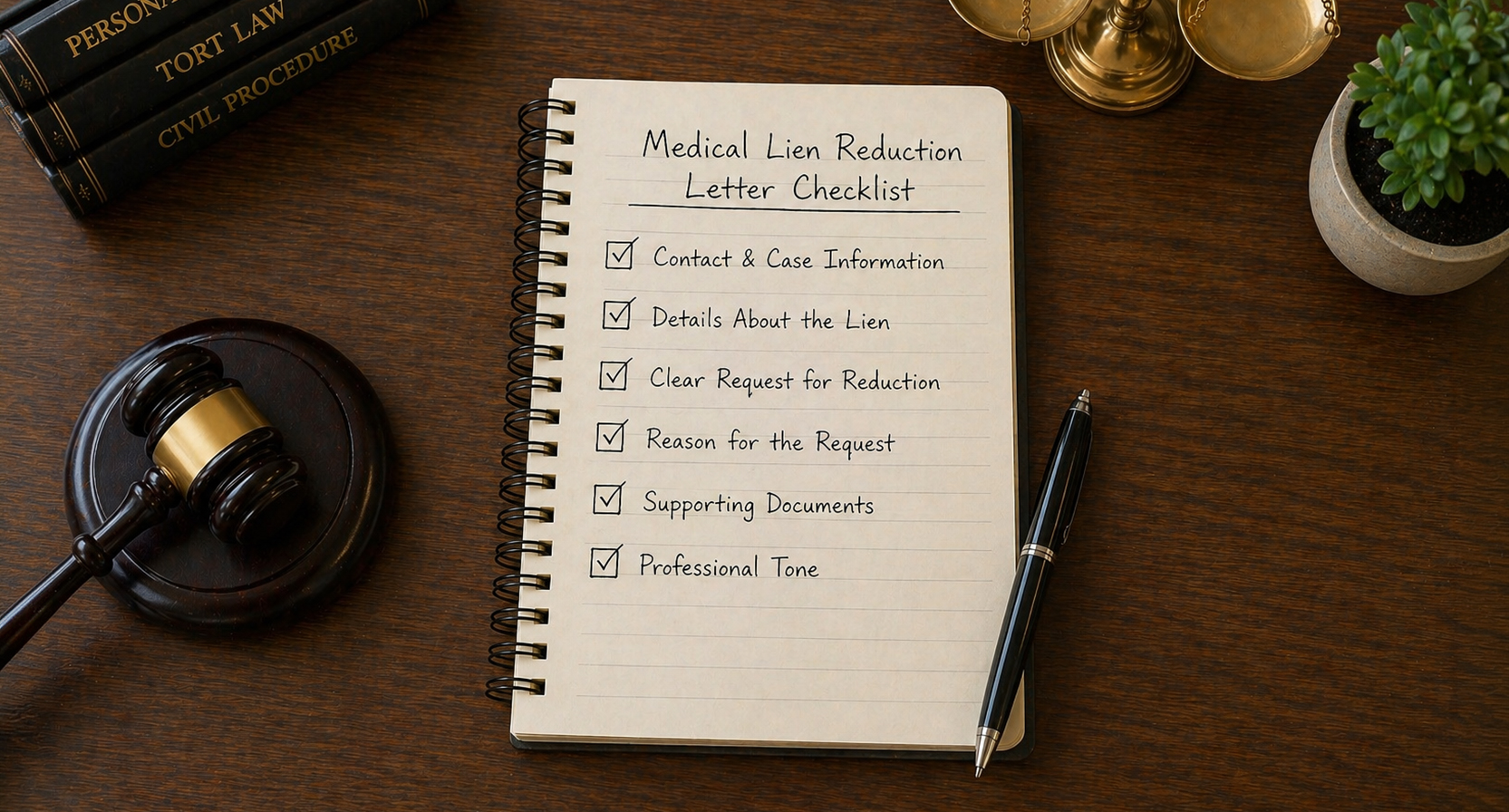
To get the best results, your medical lien reduction letter should include a few simple but important parts.
1. Contact and Case Information
Start with clear details:
- Your name and address
- The case file or claim number
- The name of the hospital, billing department, or subrogation department
This helps the claims department quickly identify your case.
2. Details About the Lien
Explain the current lien balance and include:
- Total amount from the billing statement
- Date of treatment
- Type of medical expenses
A lien is a legal claim for repayment from your settlement proceeds, so accuracy matters.
3. Clear Request for Reduction
State that you are asking for a lower amount. This is the main goal of your lien reduction request letter.
You can also suggest a new amount in your lien settlement agreement letter.
4. Reason for the Request
Give simple and honest reasons, such as:
- Limited settlement fund
- High medical debt
- Financial hardship
- Charges that seem incorrect
Many liens can be reduced when you explain your situation clearly.
5. Supporting Documents
Attach proof to support your request:
- Medical records
- Updated billing statement
- Financial details
These documents help show why your lien adjustment letter is fair.
6. Professional Tone
Keep your letter polite and clear. Whether written by you or a plaintiff attorney, a respectful tone improves your chances of success.
Sample #1 – Medical Lien Reduction Letter
This medical lien reduction letter sample is used in a personal injury claim to reduce the amount taken from your settlement proceeds. Lawyers often use this letter to improve the final payout because lowering liens can greatly increase the money a client keeps
Below is a simple, clear lien-reduction template you can use.
General Medical Lien Reduction Letter Sample
[Your Name]
[Your Address]
[City, State, ZIP]
[Phone Number]
[Date]
[Hospital or Medical Provider Name]
[Billing Department / Lien Department]
[Address]
Subject: Request for Medical Lien Reduction
Dear Sir or Madam,
I am writing about the medical lien related to my personal injury claim from the accident on [Date of Accident].
According to my records, the current lien balance is [Lien Amount]. My case has now reached a case settlement, and the total settlement fund is limited. After legal fees and costs, the remaining amount is not enough to cover the full lien.
I respectfully request a reduction of this lien. This request is based on the following:
- The limited settlement proceeds available
- The high cost of medical expenses
- My current financial situation
I propose reducing the lien to [Proposed Amount] as part of a fair lien settlement agreement letter.
Please review this request and let me know if additional documents are needed. I am willing to work with your claims department or subrogation department to resolve this matter quickly.
Thank you for your time and consideration.
Sincerely,
[Your Name]
Sample #2 – Financial Hardship Medical Lien Reduction Letter
[Your Name]
[Your Address]
[City, State, ZIP]
[Phone Number]
[Date]
[Medical Provider / Hospital Name]
[Billing Department]
[Address]
Subject: Request for Medical Lien Reduction Due to Financial Hardship
Dear Sir or Madam,
I am writing regarding the medical lien associated with my personal injury claim arising from the accident on [Date of Accident].
The current lien balance is [Lien Amount], and my case has now reached a case settlement. However, the total settlement fund is limited. After legal costs and other expenses, there are not enough settlement proceeds to cover the full lien.
I am facing serious financial hardship at this time. My income is limited, and I have ongoing expenses that make it difficult to pay the full amount. Because of this, I respectfully request a reduction of the lien. I propose a reduced payment of [Proposed Amount] as full and final settlement of this claim.
I have attached supporting documents, including my financial affidavit and relevant billing statement, to help explain my situation.
Please consider this request and let me know if additional information is needed. I am willing to work with your claims department to resolve this matter quickly.
Thank you for your time and understanding.
Sincerely,
[Your Name]
Step-by-Step: How to Write a Medical Lien Reduction Letter
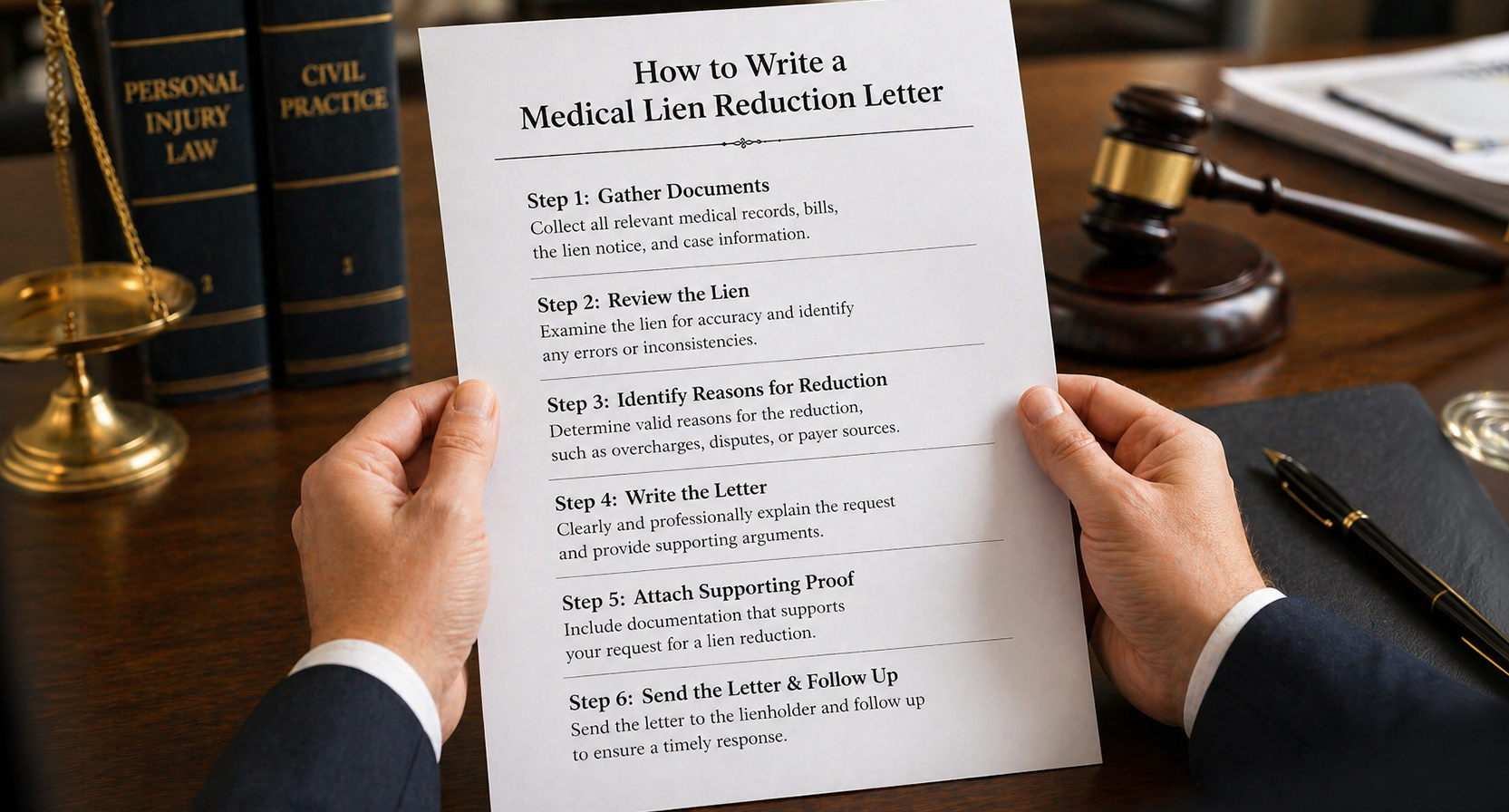
Writing a medical lien reduction letter is simple when you follow clear steps. This process helps you reduce your medical lien and keep more of your settlement proceeds.
1. Gather Your Documents
Start by collecting all key records:
- Your case file
- Medical records
- The latest billing statement
Check for errors or charges that do not match your treatment. Reviewing bills carefully can help you find issues before you negotiate
2. Review the Lien Amount
Understand your full lien balance and who placed it. It may come from a hospital, health insurer, or government program.
A lien is a legal claim on your settlement fund, so you need to know exactly what you owe before making a request
3. Identify Reasons for Reduction
Think about why the lien should be lowered. Common reasons include:
- Limited settlement proceeds
- High medical expenses
- Financial hardship
- Incorrect or unrelated charges
Many liens can be reduced when the amount is too high or unfair
4. Write the Letter
Now, create your lien reduction request letter. Include:
- Your case details
- The current lien amount
- A clear request for reduction
- Your reason for the request
Keep your tone polite and professional. This improves your chances of success.
5. Add Supporting Proof
Attach documents that support your claim, such as:
- Updated billing statement
- Medical reports
- Financial details
These help show why your request is fair.
6. Send and Follow Up
Send the letter to the claims department or subrogation department. Then follow up if needed.
Lien negotiation is an important step because resolving liens is required before you receive your final settlement check
Proven Strategies to Get Your Medical Lien Reduced
Reducing a medical lien is one of the best ways to keep more of your settlement proceeds. Many lien holders are open to negotiation, especially when you present strong reasons and clear proof.
Here are simple and effective strategies you can use.
1. Check for Errors in the Billing Statement
Always review your billing statement carefully. Look for:
- Duplicate charges
- Services not related to your injury
- Overpriced treatments
Errors are common, and correcting them can lower your lien balance right away.
2. Show That the Settlement Is Limited
If your settlement fund is small, explain this clearly. Many providers agree to reduce liens when the total recovery cannot cover all costs. This is a key point in any claim settlement negotiation.
3. Use Financial Hardship as a Reason
Explain your financial situation. If paying the full amount would cause hardship, include proof. Many medical providers accept lower payments when they see real need.
4. Apply the Proportional Reduction Rule
If your settlement does not cover all damages, you can argue that the lien holder should also take a reduced share. This fair-share approach is often used by personal injury lawyers to lower liens.
5. Negotiate Early and Stay Persistent
Start your lien negotiation early. Do not wait until the last step. Follow up with the claims or subrogation department, as needed. Many negotiations take time but lead to better results.
6. Work With a Lawyer When Needed
A law firm or legal counsel can use legal rules and experience to more effectively reduce liens. Attorneys often find ways to challenge or lower liens and protect your final settlement check.
Can You Reduce Medical Liens Without a Lawyer
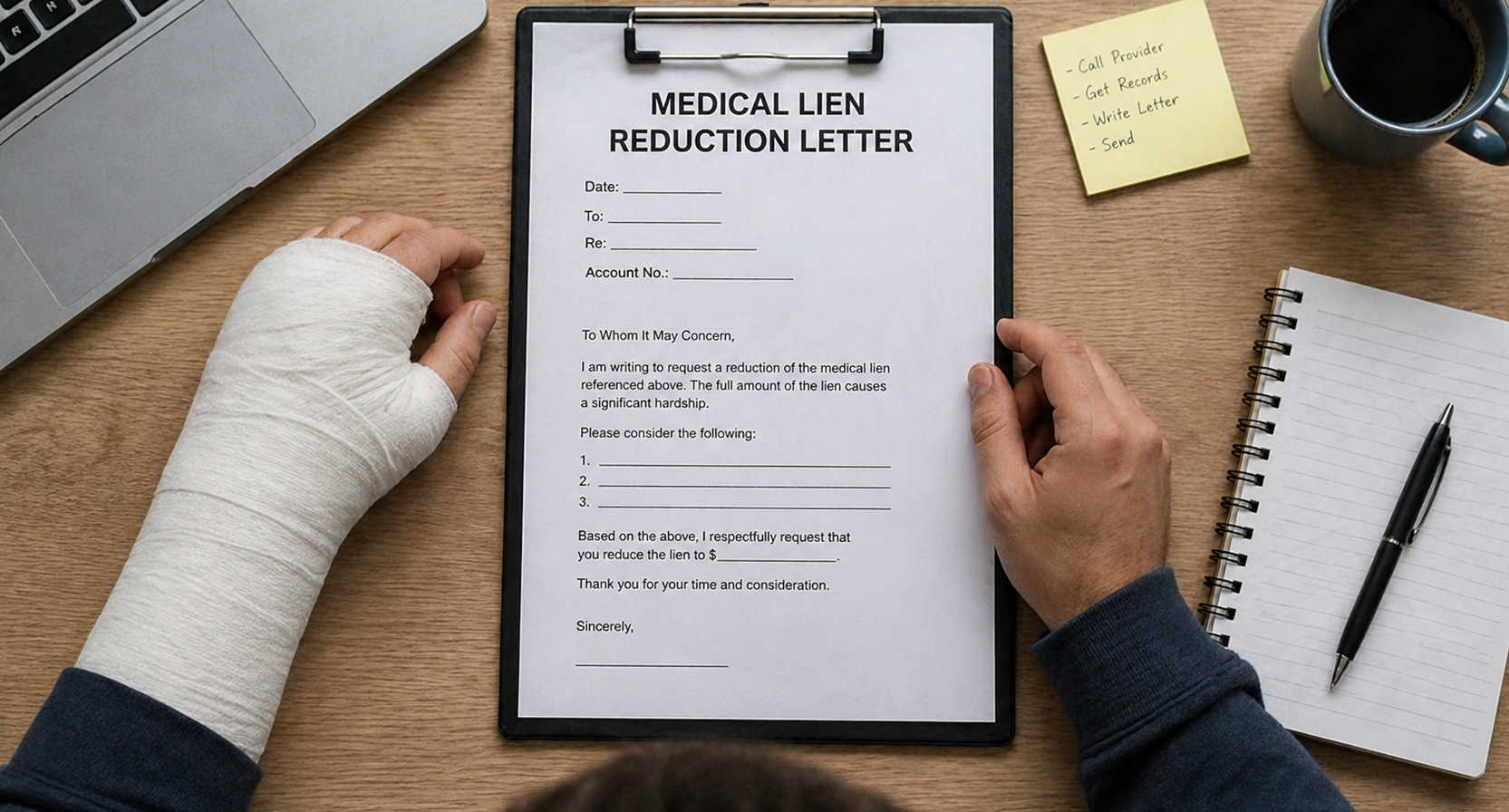
Yes, you can reduce a medical lien without hiring a personal injury lawyer, but it depends on your case. Many people handle lien negotiation on their own with a clear medical lien-reduction letter and proper documents.
When You Can Do It Yourself
You may handle it on your own if:
- The lien balance is small
- The case is simple
- The medical provider is easy to contact
- There are no complex legal rules
Many lien holders are open to negotiation, and asking for a reduction can help you keep more of your settlement proceeds
When You Should Get Legal Help
You should consider a law firm or legal counsel if:
- The lien involves Medicare or Medicaid
- The settlement fund is large
- There are disputes about charges
- Multiple liens are involved
Government liens are subject to strict rules, and mistakes can lead to penalties.
Pros of Doing It Yourself
- Saves legal fees
- Simple process for small claims
- Direct communication with the claims department
Cons of Doing It Yourself
- Harder to use legal arguments
- Less negotiation power
- Risk of paying more than needed
Why Lawyers Often Get Better Results
A plaintiff’s attorney or settlement negotiator understands the law and strategies. They can:
- Challenge unfair charges
- Use legal rules to reduce the lien
- Protect your final settlement check
In many cases, strong negotiation can significantly lower what you owe and increase your final payout
Frequently Asked Questions (FAQ)
Are medical liens negotiable?
Yes. Most medical liens can be reduced through proper lien negotiation. In fact, lowering a lien is one of the best ways to increase the money you keep from your personal injury settlement
How much can a lien be reduced?
The reduction depends on your case. Factors include:
- Total settlement proceeds
- Strength of your claim
- Amount of medical expenses
Many medical providers accept less than the full amount, especially if the settlement fund is limited or there is financial hardship
How long does lien negotiation take?
The process can take weeks or even months. It depends on the type of lien and the claims department involved. Some cases take longer when dealing with Medicare or Medicaid liens
What happens if you do not pay a lien?
If a medical lien is unresolved, it can delay your settlement check or result in legal action.
A lien is a legal claim on your case settlement, and it must be satisfied before funds are fully released
How do I know if I have a medical lien?
You may have a medical lien if you received treatment without paying up front or if you received a notice from a hospital, insurance company, or government program. Many liens are tied directly to your personal injury claim and must be paid from your settlement proceeds.
Do all personal injury cases have medical liens?
No. Not every personal injury settlement has a lien. But liens are common when a medical provider or health insurer pays for your care and wants reimbursement from your injury compensation.
Who gets paid first from a settlement?
In most cases, payments are made in this order:
- Legal fees and case costs
- Valid medical liens
- The remaining amount to you
This means you often receive money last from your case settlement.
Can a lien be removed completely?
Sometimes. A lien can be reduced or even removed if:
- It is not valid
- Charges are incorrect
- There is strong financial hardship
However, valid liens usually must be paid in some amount.
What if my settlement is not enough to pay the lien?
If your settlement fund is too small, you may still owe the remaining balance. This is why lien negotiation is important to lower the amount before payment.
Can liens appear after settlement?
Yes. Some medical liens may show up later, especially from government programs. This can delay your final settlement check if not handled early.
Do I have to agree to a lien before it is placed?
Not always. Some medical providers can file a lien without direct approval if they treated you for accident-related injuries.
What is the difference between a medical bill and a medical lien?
A medical bill is a request for payment. A medical lien is a legal claim that must be paid from your settlement proceeds.
Can insurance companies reduce their liens?
Yes. Many insurance companies will negotiate and accept a lower amount, especially if the settlement proceeds are limited.
Why do medical liens exist?
Medical liens allow you to receive treatment without paying up front. Providers agree to wait and get paid later from your personal injury settlement.