
Arbitration vs Mediation in Personal Injury Cases Explained

Personal injury cases happen when someone is hurt in a crash, fall, or other accident. Many injured people want a fair settlement but worry about the long and costly process of going to trial. Alternative Dispute Resolution (ADR) gives two main choices: mediation and arbitration. These options help resolve disputes without a full court case. They can save time, money, and stress for everyone involved.
In a mediation process, a neutral mediator helps the injured person and the other party communicate and reach a settlement. The mediator does not decide who is right or wrong. The goal is to find a solution that both sides can accept together.
In arbitration, a neutral arbitrator listens to both sides and makes a decision, like a private judge. The outcome may be binding and enforceable, like a court judgment, or non-binding, allowing either side to choose another path.
Both mediation and arbitration are important tools in the personal injury claim process. They help injured people avoid a lengthy trial and still pursue a fair outcome with support from a personal injury lawyer or legal counsel.
What Are Mediation and Arbitration?
Mediation is a way to solve a dispute with help from a neutral third person called a mediator. In mediation, the mediator does not choose a winner. Instead, they help both sides communicate and reach a fair settlement that works for everyone involved in a personal injury claim. Mediation is usually less formal and can save time and money compared to a court trial. Parties can stop mediation at any time and still go to court if they want.
Arbitration is different. In arbitration, a neutral person, called an arbitrator, listens to both sides, reviews the facts, and then issues a decision, called an arbitration award. This award can be binding, meaning it must be followed like a court decision, or non-binding, meaning the parties can still go to court later. Arbitration is more like a private trial and can be faster than going to court, but it may feel more formal than mediation.
Both mediation and arbitration are types of Alternative Dispute Resolution (ADR). They help people in personal injury cases resolve conflicts without having a full trial in court. ADR methods aim to make the process quicker, cheaper, and less stressful for everyone.
Step-by-Step Overview of the Processes
In a personal injury case, both mediation and arbitration are part of Alternative Dispute Resolution (ADR) that help the injured person and the other side find a settlement without a long trial. Each process has its own steps and rules.
How Mediation Works
- Agree to Mediate – Both sides, including the injured party (often the plaintiff) and the other side or their insurance adjuster, agree to start mediation. This can happen before or after a lawsuit is filed.
- Choose a Mediator – A neutral mediator is selected. This mediator has no power to decide the outcome but guides the discussion toward an agreement.
- Prepare for Mediation – Each side gathers key evidence, such as medical records, accident reports, bills, and proof of lost wages, to clearly explain their position.
- Opening Session – At the mediation meeting, the mediator explains the rules and each side may give an opening statement about their case.
- Discussion and Negotiation – The mediator helps both sides talk and explore fair ways to reach a settlement. They may meet privately with each side to move offers back and forth.
- Agreement or Next Step – If both sides agree on a settlement, that agreement is written down and signed. If they do not agree, the case may go back to negotiations, proceed to arbitration, or go to trial.
Mediation is usually confidential, meaning what is said there is not shared outside the process. This helps both sides speak freely and work toward a settlement without fear of public exposure.
How Arbitration Works
- Arbitration Agreement – The injured person and the other side agree to have an arbitrator decide the outcome. This can happen in a contract before a dispute or after a personal injury case starts.
- Select an Arbitrator – A neutral third party with experience in injury law is selected as the arbitrator. Sometimes, both sides agree on who this will be.
- Exchange Information – Both sides share evidence, just like in a court case. This may include documents and statements.
- Arbitration Hearing – Each side presents its case to the arbitrator. They explain facts, show evidence, and make arguments.
- Arbitrator’s Decision – The arbitrator reviews all the evidence and issues an arbitration award. In most personal injury cases, the decision is binding and final, meaning both parties must abide by it.
- Outcome Enforcement – If the award is a binding arbitration, it acts much like a court decision. If it is non-binding, either party may reject it and proceed to trial.
Arbitration is more formal than mediation and is often faster and less costly than a full civil trial, but it usually offers fewer opportunities to appeal the decision.
Key Differences: Mediation vs Arbitration
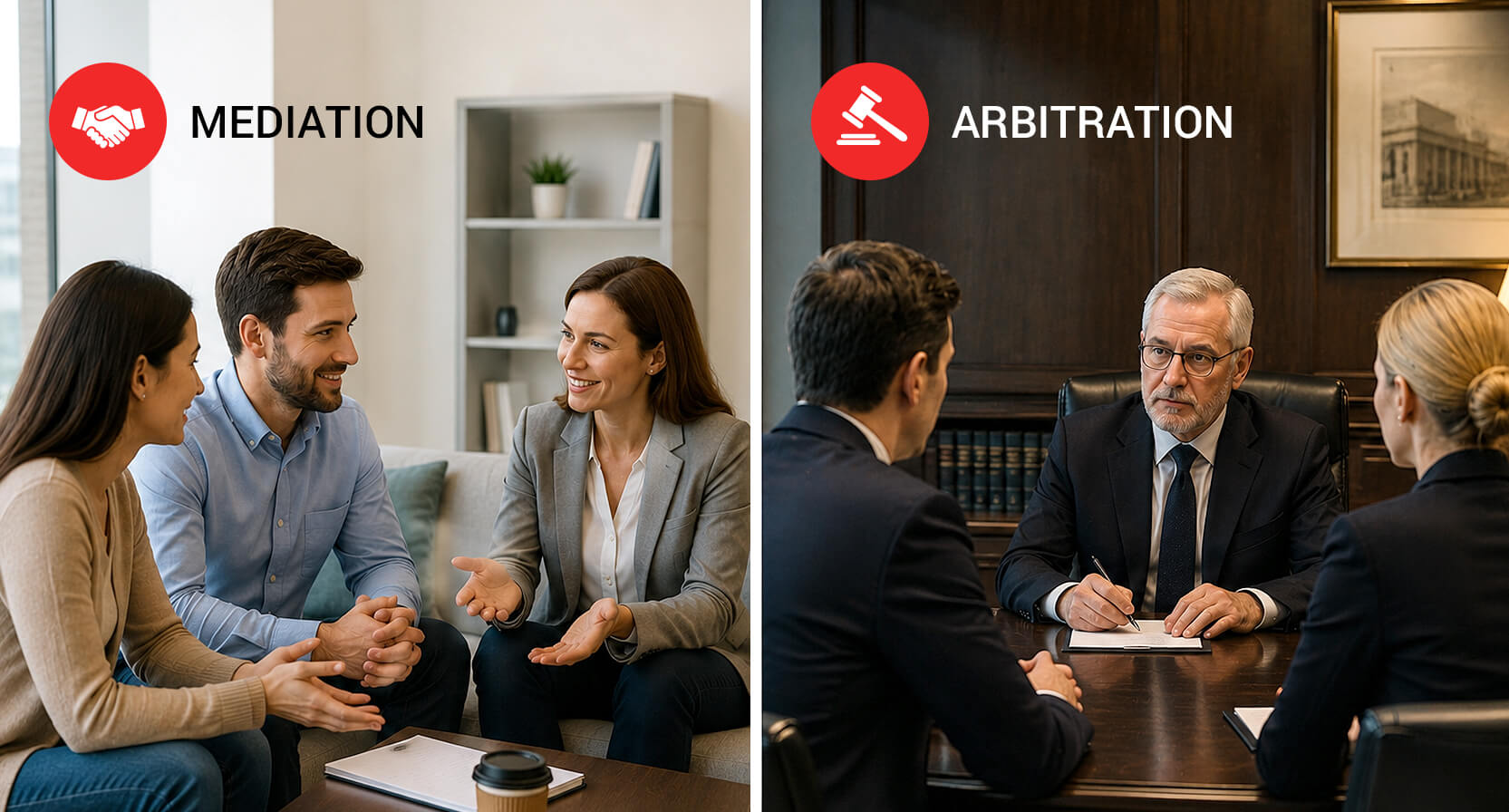
This section explains the main differences between mediation and arbitration in simple terms. Both are Alternative Dispute Resolution (ADR) methods that help settle personal injury cases without going to a full trial, but they vary in how decisions are made, how formal they are, and how much control each side has.
1. Who Decides the Outcome
- In mediation, the mediator helps both sides talk and find a fair settlement, but the mediator does not choose the outcome. The injured person and the other party decide together.
- In arbitration, the arbitrator hears the case and makes a decision, called an arbitration award. This decision is usually final and legally binding unless the parties have agreed on non-binding arbitration.
2. Formality of the Process
- Mediation is more informal and focuses on open communication and negotiation. The process is flexible and can be adjusted to fit the needs of both parties.
- Arbitration is more formal and similar to a private trial. There are structured steps, and the arbitrator may follow rules like a judge would in court.
3. Control Over Settlement Terms
- In mediation, both sides keep control over the final settlement. Both parties must agree for the agreement to become binding.
- In arbitration, the arbitrator’s decision usually controls the outcome. This can limit a party’s control over the final result, especially in binding arbitration.
4. Appeal Rights
- If no settlement is reached in mediation, the case can still go to trial later.
- In binding arbitration, there are very limited rights to appeal the arbitrator’s decision, meaning the award often stands as final.
5. Formal Rules and Evidence
- Mediation does not usually follow strict rules of evidence or procedure. Parties can speak freely and focus on solving issues cooperatively.
- Arbitration may follow more formal procedures for presenting evidence and arguments, similar to a court setting.
6. Confidentiality
- Both mediation and arbitration are generally confidential, meaning what is discussed is not shared publicly, like in a court trial. This helps protect the details of personal injury claims.
7. When Each Is Best
- Mediation is often best when both sides want to remain involved in the negotiation and retain control over settlement terms.
- Arbitration can be preferable when you want a clear decision or when negotiation through mediation does not work.
In short, Mediation offers greater control and flexibility, while arbitration provides a structured process and a final decision that is often legally binding. Reviewing these differences can help you choose the best path for your injury case with support from your personal injury lawyer or legal counsel.
Pros and Cons
When you compare mediation and arbitration in a personal injury case, each Alternative Dispute Resolution (ADR) method has clear benefits and drawbacks that can affect your settlement, cost, time, and control over the result.
Benefits of Mediation
Mediation helps people resolve a personal injury claim outside a court and can be a smart choice when both sides want to work together toward a settlement. In mediation:
- You and the other side keep control of any final agreement, rather than a third party deciding for you.
- Mediation is often faster and cheaper than going to trial or even arbitration, so legal costs and time in dispute are lower.
- The process stays confidential, so what you discuss does not become public record.
- Parties may feel less stressed or confrontational since the mediator focuses on discussion rather than judgment.
However, mediation also has some limitations:
- There is no guarantee of an outcome, and the mediator does not issue a binding decision unless both sides agree.
- If one side refuses to cooperate, mediation may not work, and the case might still go to arbitration or trial.
Benefits of Arbitration
Arbitration can serve as another way to resolve disputes outside of court, and it may be a good option when mediation fails or when parties want a clear outcome. In arbitration:
- The arbitrator’s decision is often binding, like a judge’s order.
- Arbitration usually resolves a dispute sooner and at lower cost than a long civil trial.
- The process is private, and it stays out of public court records.
- Parties may choose an expert arbitrator who understands personal injury law well.
But arbitration has some drawbacks:
- Because the arbitrator decides, you give up some control over the final award.
- Binding arbitration offers limited rights to appeal, so you may not be able to challenge the decision later.
- Arbitration can still be more costly and formal than mediation.
When Each Method Is Typically Used

In personal injury cases, both mediation and arbitration are common Alternative Dispute Resolution (ADR) paths used to avoid a long, costly civil trial when possible. Each method works best in different situations, depending on the parties’ goals and the stage of the personal injury claim process.
When Mediation Is Often Used
Mediation is usually chosen when both sides want to reach a settlement before going to trial. Lawyers and courts often suggest mediation early in the case because it can help resolve disputes faster and at lower legal cost than litigation.
- Before trial: Most personal injury lawyers and courts encourage mediation once key evidence is ready, so each side can see the strengths and weaknesses of the case.
- Stalled settlement talks: If insurance adjusters and plaintiffs cannot agree on compensation, mediation creates a space to talk with a neutral mediator guiding the negotiation.
- Complex negotiations: In cases with multiple parties or complicated facts, mediation helps find a fair resolution without a judge or jury.
- Confidential and controlled: Parties who care about privacy or want to keep control of the settlement terms often choose mediation.
Mediation works best when both sides are willing to compromise and seek outcomes together rather than leaving the decision to an outside third party.
When Arbitration Is Often Used
Arbitration is more likely when parties want a definitive decision without going to court, especially if they cannot settle through mediation or negotiation. An arbitrator acts much like a private judge and issues a final decision called an arbitration award.
- After mediation fails: If mediation does not result in a settlement, parties often turn to arbitration to get a clear decision.
- Contract clauses: Sometimes a contract, insurance policy, or binding arbitration clause requires arbitration instead of a trial or mediation.
- Need for finality: Parties who want a faster resolution than a court trial but know mediation won’t work may choose arbitration so the arbitrator makes a decision for them.
- Structured process: Arbitration is used when both sides want a more formal process with rules governing evidence and hearings, similar to a private trial.
Arbitration is often preferred when negotiations stall, and a binding decision helps move the case forward without the time or uncertainty of a full trial.
Cost, Time & Outcomes Compared
In personal injury cases, both mediation and arbitration aim to help people settle disputes without going to a court trial. Each method affects costs, time, and outcomes differently. Understanding these differences can help you choose the best Alternative Dispute Resolution (ADR) path for your case.
How Costs Compare
Mediation is usually cheaper than both arbitration and a full trial. A typical mediation session can resolve many issues in just one meeting, which keeps fees and lawyer charges down. Since mediation often takes less time, the overall cost to both sides is usually lower than the costs of a long court case.
Arbitration is also usually less costly than a trial, but it is often more expensive than mediation. Arbitration may involve fees for the arbitrator, hearing time, and more formal preparation of evidence. Those costs add up, but arbitration still usually costs less than a full civil litigation.
How Time Is Different
Mediation can often be scheduled quickly and take only a few hours or a day. Because it focuses on negotiation, a case can sometimes be resolved in a single session if both sides agree. This makes mediation much faster than going through a full trial or even most arbitration hearings.
Arbitration usually takes more time than mediation because it is more structured. Parties exchange evidence, prepare their arguments, and present them at an arbitration hearing. Even though arbitration is usually faster than a court trial, it can still take weeks or months for the arbitrator to issue a final decision.
Outcomes and Control
In mediation, both sides keep control over the outcome. If you reach a settlement, both parties sign a written agreement that is enforceable. But if mediation does not work, neither side loses rights or options, and the case can go on to arbitration or trial.
In arbitration, the arbitrator decides the outcome. Usually, this arbitration decision is binding, meaning both parties must comply with it as if it were a court judgment. This can make arbitration outcomes more final than mediation and help the case end sooner without going to trial.
Privacy and Enforcement
Both mediation and arbitration are usually private, so details do not become public as they would in a courtroom. Mediation stays fully confidential, while arbitration decisions may be private but can still be enforced by courts if they are binding.
Frequently Asked Questions (FAQs)
1. What is the difference between mediation and arbitration?
Mediation is a structured negotiation in which a neutral mediator helps both sides communicate and reach a settlement. The mediator does not decide the outcome. Arbitration is more like a private trial, with a neutral arbitrator reviewing evidence and rendering a decision that is usually final and legally binding.
2. Is mediation binding?
Mediation itself is not binding unless both sides agree to a settlement agreement and sign it. If they agree and sign, that agreement can be enforceable like a contract.
3. Is arbitration binding?
Yes, in most personal injury cases, arbitration is binding, meaning the arbitrator’s decision (the arbitration award) must be followed by both parties unless the parties agreed to a non-binding arbitration.
4. Can I still go to court after mediation?
Yes, if mediation does not result in a settlement, the case can still go to court or into another ADR process because mediation does not remove your right to a trial.
5. Can I go to court after arbitration?
If the arbitration is binding, you usually cannot go to court after the arbitrator issues a decision, and there are very limited rights to appeal. In non-binding arbitration, you can still choose to go to court afterward.
6. Do I lose my right to a jury trial in arbitration?
Yes, binding arbitration typically means you give up the right to have a jury decide your case, because the arbitrator’s decision replaces a trial outcome.
7. Are mediation and arbitration private?
Both mediation and arbitration are usually private and confidential, unlike most court proceedings, which are public. This keeps your personal injury claim details out of public records.
8. How long do mediation and arbitration take?
Mediation sessions can often be scheduled quickly and may finish in a single meeting, making them faster than arbitration. Arbitration usually takes longer than mediation due to procedural steps, though it is still often faster than a full-court trial.
9. Which process costs more?
Mediation is usually less expensive than arbitration because it is quicker and less formal. Arbitration may cost more because of hearing time, document preparation, and arbitrator fees.
10. Do insurance companies use ADR, like mediation or arbitration?
Yes, many insurance companies use ADR to reduce costs, limit risk, and avoid the expense and delays of a trial. They often agree to or require mediation or arbitration in personal injury disputes.