
Bad-Faith Insurance Demand Letter Template

A bad-faith insurance demand letter is a clear, written request you send to your insurance company when you believe the company has not handled your claim the way it should. It is a demand letter that identifies the insurer’s actions as potentially unfair or unreasonable. This could be a denial of a valid claim, a long delay in decision-making, or a settlement offer that seems too low given your loss
Insurance bad faith occurs when an insurer fails to act honestly and fairly toward you, the policyholder, under the insurance contract. In many jurisdictions, law requires insurers to comply with the implied covenant of good faith and fair dealing, meaning they must treat claims fairly. If they don’t, you can use a bad-faith demand letter to ask for what you believe is rightfully owed and start the process before considering other steps like complaints or legal action.
A well-written bad faith demand letter tells your insurer exactly what happened with your claim, why you think the handling was unfair, and what you expect the company to do next. These letters can be used for many kinds of claims, such as car accidents, home, or other insurance disputes, and serve as an official record of your effort to resolve the issue before filing a lawsuit or a complaint with a regulator.
Bad-faith insurance claims can be complex, but the right approach and wording can make a significant difference. In this guide, you’ll learn what bad faith insurance means, how to write a strong demand letter, and the exact language that gets a claims manager’s attention. You’ll also find a practical bad faith insurance demand letter example and a ready-to-use template, so you can communicate clearly and effectively with an insurance company’s claims department.
What Is Bad-Faith Insurance?
Bad-faith insurance is when an insurer fails to handle a claim fairly or honestly. In simple terms, the insurer has a legal duty to act with good faith and deal fairly with you, the policyholder. When a company delays payment, denies a valid claim without justification, or offers an unreasonably low settlement, it may be acting in bad faith. In many jurisdictions, such behavior is illegal because insurance companies must follow fair practices when settling claims.
For example, an insurer may be in bad faith if it:
- denies a claim without a proper explanation,
- fails to investigate the loss in a reasonable time,
- delays payment without good cause, or
- ignores evidence that supports the claim. These actions show unfair claims settlement practices that can harm you financially and emotionally.
Bad-faith insurance may arise in many types of claims, including home, auto, health, and property. It can occur whether the insurer makes decisions slowly, provides shifting reasons for denial, or otherwise fails to fulfill its duties under the policy.
If you believe your insurer treated you unfairly, understanding bad faith helps you determine whether you should send a demand letter to the insurer. A demand letter is often the first official step before asking for help from your state insurance regulator or an attorney experienced in insurance disputes.
Key Elements of a Bad-Faith Insurance Demand Letter
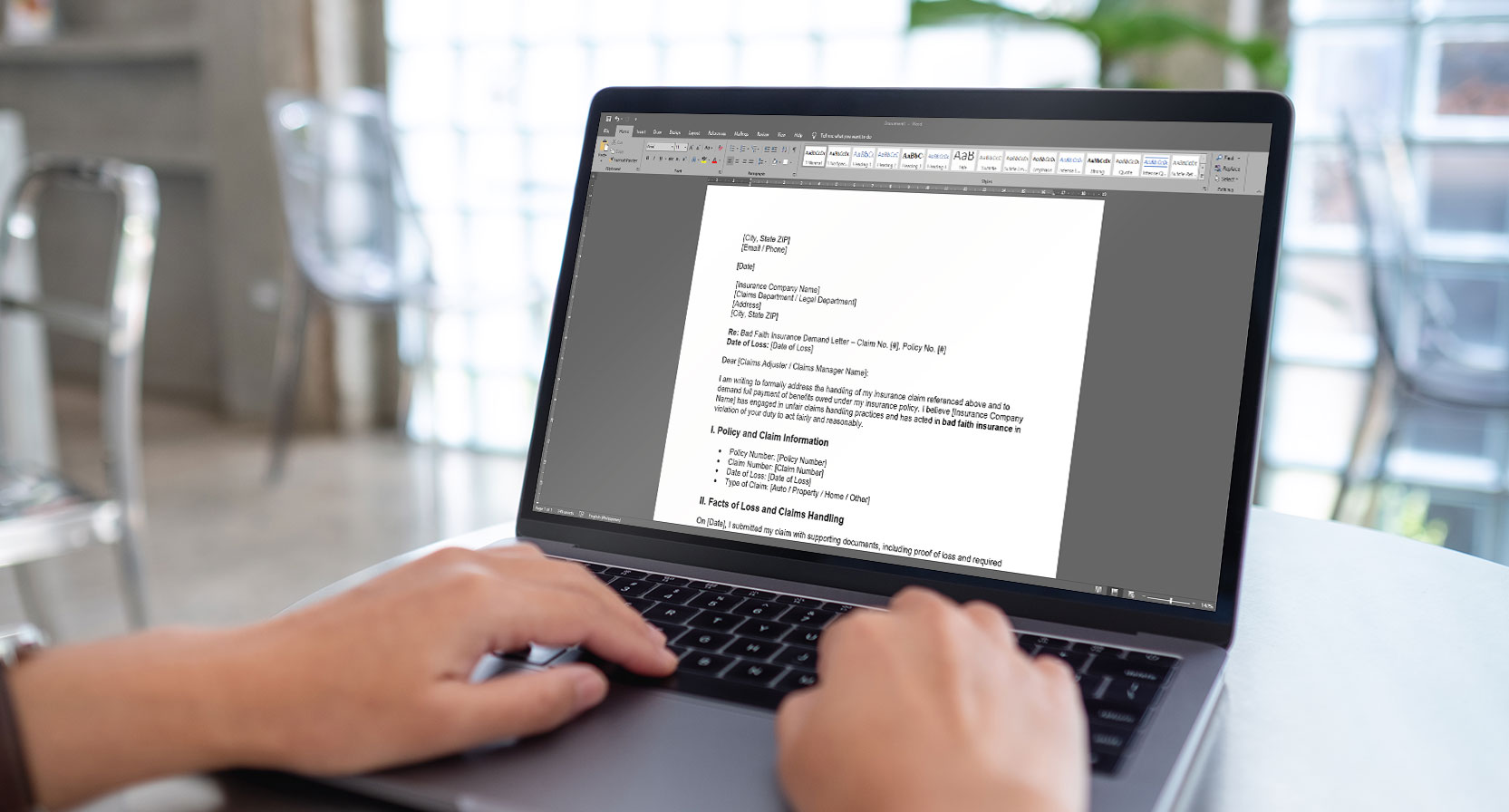
A bad-faith insurance demand letter is a clear, written request you send to your insurance company to explain why you think they handled your claim unfairly. The goal is to lay out the facts, show why the insurer’s actions may be a breach of the implied covenant of good faith and fair dealing, and ask for a fair outcome before you take other steps like filing a complaint or starting a lawsuit. A strong letter sticks to facts, uses professional language, and includes clear support for your position.
Clear Contact and Claim Information
Start your letter with your full name, address, contact details, and the insurance policy number and claim number. This ensures the insurer and the claims adjuster know exactly who is sending the letter and which claim it refers to.
Statement of Purpose
Begin by stating that you are writing a bad-faith demand letter to address how the insurer handled the claim. Explain briefly that you believe their conduct does not align with fair claim handling practices. This sets the tone for the rest of the letter.
Factual Narrative of What Happened
Describe in simple, chronological order what happened with your loss and the claim. Include dates, events, and communications you had with the insurer. Stick to facts and avoid emotional language. This shows why you believe the insurer’s actions were unfair or unreasonable.
Reference to Policy and Applicable Law
Explain how your policy applies to the situation. If the insurer denied or underpaid your claim, refer to the part of your insurance contract that supports your position. If there are relevant laws or duties that forbid unfair claims handling, mention them in plain terms.
Detailed List of Supporting Evidence
List and attach all documentation supporting your claims. This can include repair estimates, medical bills, correspondence, photos, reports, and any other proof of loss. Label each document so the insurer can review it easily.
Statement of Damages or Expected Resolution
Tell the insurer what you want them to do. This could be payment of the full claim amount, interest, penalties, or correction of a low settlement offer. Be specific with numbers and why you arrived at those figures.
Reasonable Deadline for Response
Give the insurance company a reasonable response deadline, such as 10 to 30 days from receipt of the letter. This encourages prompt action and demonstrates your seriousness about resolving the issue.
Consequences of No Response
Explain what you plan to do if the insurer does not respond by your deadline. This might include filing a complaint with your state insurance regulator, consulting an attorney, or pursuing legal action. Present this in clear, professional terms.
Professional Tone and Delivery
Keep the letter professional and factual. Avoid threats or emotional language. Sending the letter by certified mail or another trackable method demonstrates a serious effort to resolve the dispute and helps prove delivery if you need it later.
Bad-Faith Insurance Demand Letter Template (Ready to Use)
Here is a clear example of a bad-faith insurance demand letter you can use as a starting point when writing your own. A good template helps you organize the factual narrative, demonstrate bad-faith conduct, and set out what you want the insurance company to do. This example follows best practices for structure and tone, and avoids emotional language while clearly stating your case.
Sample Bad-Faith Insurance Demand Letter
[Your Name]
[Your Address]
[City, State ZIP]
[Email / Phone]
[Date]
[Insurance Company Name]
[Claims Department / Legal Department]
[Address]
[City, State ZIP]
Re: Bad Faith Insurance Demand Letter – Claim No. [#], Policy No. [#]
Date of Loss: [Date of Loss]
Dear [Claims Adjuster / Claims Manager Name]:
I am writing to formally address the handling of my insurance claim referenced above and to demand full payment of benefits owed under my insurance policy. I believe [Insurance Company Name] has engaged in unfair claims handling practices and has acted in bad faith insurance in violation of your duty to act fairly and reasonably.
I. Policy and Claim Information
- Policy Number: [Policy Number]
- Claim Number: [Claim Number]
- Date of Loss: [Date of Loss]
- Type of Claim: [Auto / Property / Home / Other]
II. Facts of Loss and Claims Handling
On [Date], I submitted my claim with supporting documents, including proof of loss and required information. Since that time, I have complied with all policy requirements and provided all requested documentation promptly. Despite this, the claim has been denied or underpaid without adequate explanation, or payment has been unreasonably delayed. I believe this conduct constitutes bad-faith claims-handling practices.
III. Supporting Documentation
Attached are documents that support my claim and demonstrate the insurer’s mishandling, including:
- Proof of loss forms
- Photographs and estimates
- Correspondence with the insurer
- Bills and invoices
IV. Demand for Benefits, Interest, and Damages
Based on the coverage under the policy and the documented losses, I demand the following:
- Payment of all policy benefits owed in the amount of $[Amount]
- Payment of statutory interest, penalties, or consequential damages where allowed by law
- A written explanation if any portion of the claim that remains unpaid, including the legal and factual basis for denial
Please respond to this demand within [Number] days of receipt. If you do not provide full payment and a reasonable written explanation within this deadline, I will pursue all available legal remedies, including filing a complaint with the appropriate state insurance regulator, initiating litigation for breach of contract and bad faith, and seeking recovery of additional damages and attorney’s fees.
Sincerely,
[Your Name]
How to Use This Template
- Replace bracketed text with your specific claim and policy details.
- Keep the letter professional and factual. Healthcare bills, repair estimates, and correspondence should be organized and attached.
- Consider sending by certified mail with a return receipt requested to provide proof of delivery to the insurer.
A well-written bad-faith demand letter like this can help you show the insurer you are serious about resolving the dispute fairly, and it can support later steps if the insurer does not respond appropriately.
Tips for Writing an Effective Letter and What Comes Next
After you send your bad-faith insurance demand letter, there are a few things you can do to help your cause and respond to the insurer’s reply. A well-written letter that presents facts, evidence, and a clear request can encourage the insurance company to take your claim seriously and may lead to a fair outcome.
Keep a Professional but Firm Tone
When you write your bad-faith demand letter, stay clear and respectful. Explain the situation and why you believe the insurer’s actions were unfair or unreasonable. Providing clear facts, dates, and documents together helps the claims adjuster understand your position. Avoid emotional or threatening language, because that can distract from your points and make your letter less effective.
Organize and Attach Supporting Evidence
Good documentation supports your claim. Include the original policy, any correspondence you already had with the insurer, repair or medical estimates, photos, invoices, and anything else that supports your case. Organized attachments make it easier for the insurer to see why you believe damages are owed and can reduce confusion.
Wait for the Response Within Your Set Deadline
After you send your demand letter, give the insurance company time to respond by the deadline you included. Many insurers will respond with one of these options:
- They may accept your demand and start the settlement process.
- They may make a counteroffer below your request.
- They may simply deny the claim again or refuse to pay.
You should be ready to consider each response carefully.
Follow Up If You Don’t Hear Back
If the insurer does not respond by your deadline, follow up in writing or by phone. Confirm receipt of your letter and ask when you can expect a response. Keep records of all contacts, as these notes may help you later if the matter progresses to a legal claim or complaint.
Consider Your Next Steps
If the insurer refuses to offer a fair settlement or continues to delay, you have options. You can file a complaint with your state insurance regulator, consult an attorney about a bad faith claim, or, in some cases, prepare to file a civil lawsuit for breach of contract and bad faith. Courts in many states allow damages exceeding the policy limits when bad-faith conduct is shown.
Why This Matters
Sending a thoughtful demand letter signals that you are serious about resolving your dispute fairly without immediate litigation. It also creates a record that you tried to settle before going to court, which many judges view as a positive step in the process.
What to Do After Sending Your Bad-Faith Insurance Demand Letter

Once you send your bad-faith insurance demand letter to your insurer, the next steps matter. How the company responds or does not respond can shape the outcome of your claim and whether you need to escalate to a bad-faith claim or legal action.
Wait for a Response by Your Deadline
After you mail your letter, the insurer usually reviews your submission and supporting evidence. Most companies assign an adjuster to handle bad-faith claims and respond, but the exact timing can vary. You may get a response within a few weeks, or it could take longer depending on the insurer’s workload and the complexity of your case.
Possible Insurance Company Responses
When the insurer replies, it will typically follow one of these paths:
- Accept the demand — The company agrees to your request and begins settlement.
- Make a counteroffer — The insurer proposes a different amount, which may start a negotiation.
- Deny the claim again — They refuse payment or maintain that your claim lacks support.
- Request more information — The insurer requests additional documents before making a decision.
- Ignore the letter — No reply, in which case you may want to follow up.
Follow Up if Necessary
If you do not hear back by the deadline you set in your letter, reach out to the claims adjuster or the insurance company’s claims department to confirm they received it. Keep notes of all calls, emails, and responses. Professional follow-ups can remind the insurer of its duty to investigate and respond.
Evaluate Counteroffers Carefully
Insurance companies often respond with counteroffers below your asking price. Take time to review any offer against your documented losses and expenses before accepting. You can negotiate further if the counteroffer does not fairly compensate you.
Document Everything
Keep copies of all correspondence, responses, and phone call records with the insurer. These records can support your position if you need to escalate to a complaint with your state insurance regulator or pursue legal action for bad faith, such as a breach of contract or seeking attorney’s fees.
Consider Escalation If You Don’t Get a Fair Resolution
If the insurer denies your bad-faith demand, delays repeatedly, or fails to negotiate in good faith, you have options:
- File a complaint with your state insurance department — Regulators review unfair claims handling and may intervene.
- Consult an attorney — A lawyer experienced with bad faith insurance claims can help you pursue a formal lawsuit.
- Prepare for litigation — A court case may lead to recovery of policy benefits, interest, consequential damages, and sometimes punitive damages under applicable law.
Expect the Process to Take Time
Keep in mind that settlement negotiations can take weeks or months. Even with a strong bad-faith demand letter, insurers may review the evidence, conduct further investigation, and negotiate before reaching a resolution. Patience and persistence, along with staying organized, can help you pursue the fair compensation you believe you are owed.
Frequently Asked Questions (FAQs)
What does a demand letter do?
A demand letter tells the insurance company you believe they mishandled your claim and that you want a fair resolution before going to court. It shows you are serious about resolving the dispute without filing a lawsuit.
Will the insurer always respond to my demand letter?
No. Insurance companies are not legally required to respond by a specific deadline, but most do so to begin settlement discussions.
How soon might I hear back after sending the letter?
Response times vary a lot. Some insurers reply in a few weeks, while others take longer. The timeline depends on the complexity of the claim and the speed with which they review your evidence.
What are typical responses from the insurance company?
After reviewing your letter and documents, the insurer may:
• Accept your demand and begin paying.
• Offer a counteroffer that suggests a different settlement amount.
• Deny the claim again with reasons.
• Ask for more information before moving forward.
What should I do if I get a counteroffer?
Review the counteroffer carefully. You can accept it, negotiate further, or decide to move to the next steps, like complaint filing or legal action if the offer is not fair.
May I follow up if I don’t receive a response?
Yes. If you do not receive a response by your deadline, follow up with the insurance company to confirm receipt of your letter. Keep records of all communication.
Are there any alternatives if the insurer rejects my claim?
Yes. You may file a complaint with your state insurance regulator, consult an attorney, or prepare to file a bad faith insurance claim in court if negotiations fail.
How long can the process take?
There is no fixed timeline. Settlement negotiations can take weeks or months. Cases that go to litigation may take longer, especially if complex evidence or legal issues are involved.
Is a demand letter always necessary before a lawsuit?
Often, it is a good first step because it gives the insurer an opportunity to settle and demonstrates an effort to resolve the dispute before filing a lawsuit. In some places, a demand letter may be required before legal action.