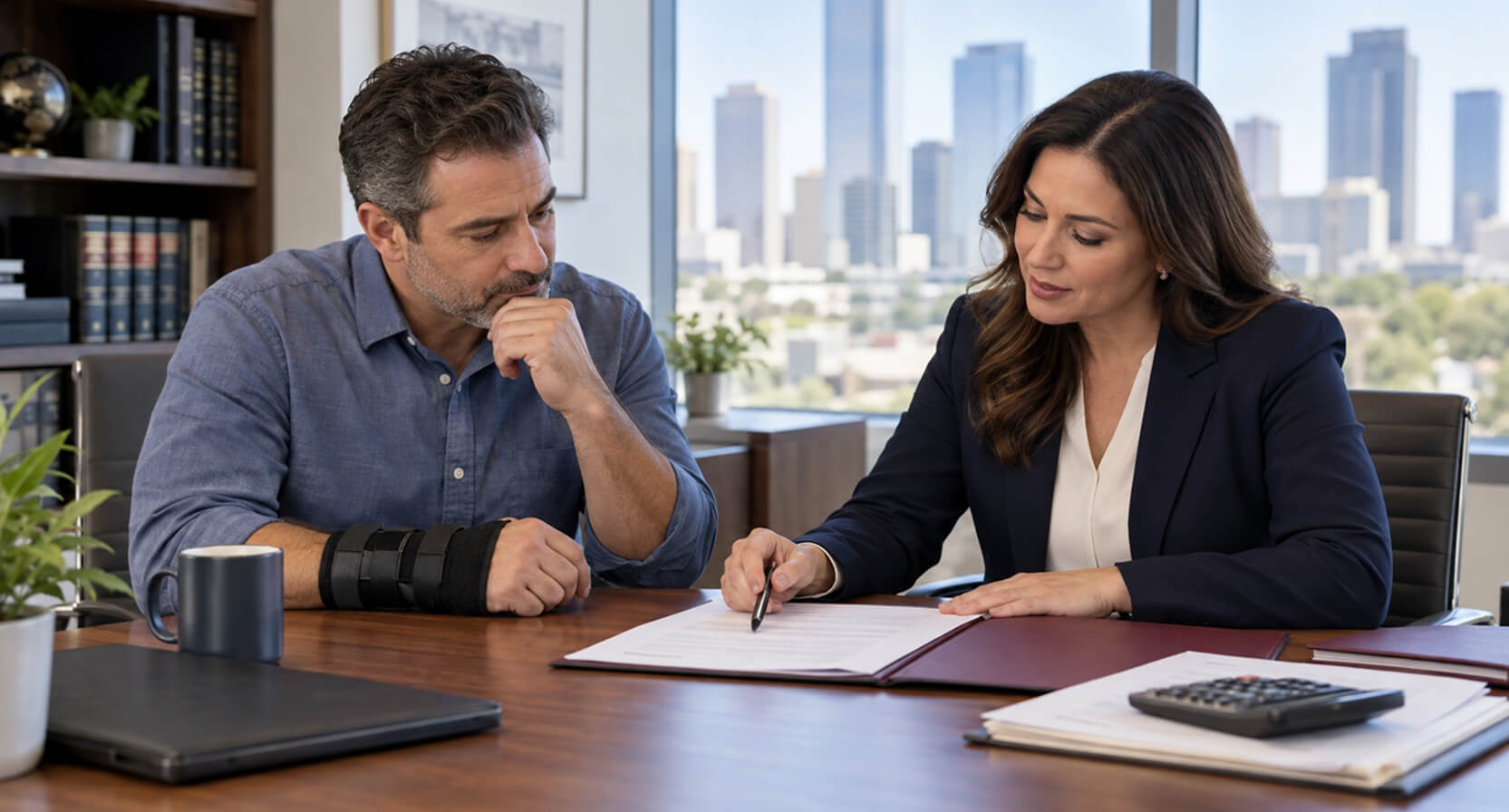
What is a Letter of Protection in Texas?

If you are injured in a Texas accident and do not have the funds or health insurance to pay the doctor now, a Letter of Protection (LOP) may help. This document is an agreement among you, your Personal Injury Attorney, and your Healthcare Provider. It tells the provider: we will pay from the legal Settlement Agreement or judgment later if your Personal Injury Claim succeeds.
In a typical personal‑injury scenario, you visit a doctor, hospital, or specialist because of an accident. Bills pile up. Meanwhile, your case with the insurance company is still pending. This is where a Letter of Protection comes in: it is a legal agreement involving you (the injured party), your attorney, and the healthcare provider. The document promises that the doctor or medical facility will be paid from any future settlement or judgment you get.
In Texas, LOP is used in many situations, including car accidents, slip-and-fall incidents, workplace injuries, and cases involving uninsured or underinsured victims of negligence. With a Letter of Protection, you can access care without immediate cost and build your case with documented medical treatment.
In this guide, we will explain:
- What a Letter of Protection is in Texas.
- Why and when it’s used in a personal injury case.
- How it works step by step.
- Important legal terms and considerations.
- The benefits of using an LOP.
- The risks and limitations you must watch out for.
- How to obtain one and work with your attorney.
By understanding how an LOP works, the roles of lawyer, provider, and injured party, and how this affects your medical bills and your case, you can make a better decision for your recovery and your claim.
What Is a Letter of Protection (LOP) in Texas?
A Letter of Protection (LOP) is a legal agreement used in Texas personal injury cases. It’s made between three parties: you (the injured party), your personal injury attorney, and the medical provider.
Here’s how it works in simple terms:
- Your attorney sends the LOP to the healthcare provider.
- The medical provider agrees to treat you now and wait to be paid later.
- The payment will come out of your future settlement or judgment in your claim.
This tool is helpful because many people injured in Texas in car accidents, truck accidents, motorcycle accidents, slip‑and‑fall incidents, or workplace injuries don’t have enough health insurance or the money upfront to pay for treatment.
In other words, the LOP helps you get medical care right away, like doctor visits, imaging, specialist care, even if you cannot pay right now. Your provider is paid later, once your claim is resolved.
It’s important to understand this is a binding contract. If your case does not result in a settlement or judgment, you may still end up responsible for the medical bills under the LOP terms.
Why and When Is a Letter of Protection Used in Texas Personal Injury Cases?
A Letter of Protection (LOP) is often used in Texas when you’ve been hurt in an accident, and you can’t pay for the medical care you need right away.
Here are common when & why scenarios:
• When you need care but have no or limited insurance
If you don’t have health insurance, or your insurance will not cover all the bills because the injury was caused by someone else’s fault, an LOP can help you get treated now while your case moves forward.
• When you are waiting on a settlement or judgment
In cases like car accidents, motorcycle accidents, truck accidents, or slip‑and‑fall incidents in Texas, you might have to wait for the other party’s insurance company to pay or for a court to decide. During this time, your medical bills can grow. An LOP tells your doctor that they will get paid later from any settlement or verdict.
• To avoid upfront collection or damage to your credit
Without an LOP, medical providers may bill you or send you to collections. That can hurt your credit. Using an LOP can delay this, giving you time to focus on recovery and your legal case.
• To build better evidence for your case
Timely treatment is important in a personal injury claim. Using an LOP lets you see specialists or get imaging and therapy sooner. That helps show you’re serious about your recovery and strengthens your claim.
• Because your lawyer believes the case has merit
Typically, your attorney will issue the LOP only if they believe your case has a good chance of recovery and that medical treatment now will support the claim. If the attorney does not believe this, they may decline to issue the LOP.
How Does a Letter of Protection Work Step‑by‑Step?
Here’s a simple breakdown of how a Letter of Protection (LOP) works in Texas personal‑injury cases:
Step 1: You get injured and hire a personal injury attorney.
After an accident like a car accident, truck accident, or slip‑and‑fall in Texas, the injured party meets with a personal injury attorney. The attorney evaluates whether the case has merit and whether the injured person lacks the immediate resources to pay for medical treatment.
Step 2: The Attorney drafts and issues the LOP to the healthcare provider.
Your attorney writes a letter declaring that the healthcare provider will be paid out of any settlement or court judgment your case obtains. The medical provider must agree to treat you now without needing payment up front.
Step 3: Medical treatment begins under the LOP.
You receive care, doctor visits, imaging, therapy, or specialist treatment while the lawsuit is pending. The medical provider treats you even though payment is deferred.
Step 4: Your personal‑injury case works its way through settlement or trial.
While you are getting treatment, your attorney handles your claim against the negligent party’s liability insurance or files suit. During this time, the medical bills are accumulating but not yet due.
Step 5: Settlement or verdict occurs, and medical bills are paid out of the proceeds.
When your case resolves, your attorney takes the settlement or judgment, pays the medical provider from the proceeds as promised in the LOP, and then you receive whatever remains.
Step 6: What if there is no recovery or the settlement is small?
Important: The LOP is a legally binding contract. If there is no recovery or the settlement is insufficient, you may still be liable for the medical bills. You may need to negotiate with the provider to reduce or modify the balance.
Key Terms & Legal Considerations
Here are some important words and ideas to know when you’re dealing with a Letter of Protection (LOP) in Texas personal injury cases. Use simple English so they can understand it clearly.
Legal Terms You Should Know
- Binding contract: An agreement you can enforce by law. When your lawyer and the medical provider sign the LOP, it becomes a binding contract.
- Medical provider: The doctor, hospital, specialist or clinic that treats you and agrees to wait for payment under the LOP.
- Settlement or judgment: The money you may receive in your personal injury case either by agreement (settlement) or court decision (judgment). The LOP payment comes from this.
- Health insurance/Insurance coverage gap: Sometimes, your health insurance will not pay for your treatment after a car accident or other injury. That gap is one reason an LOP may be needed.
- Liability insurance: The at‑fault person’s insurance that should cover your damages (including medical bills). An LOP may help bridge the treatment period while liability insurance is still being resolved.
- Medical documentation: Records, treatment notes, imaging, and specialist visits. These help build your case. Delays in treatment may hurt your claim.
- Discoverability: Your opponents (insurance company or defense lawyer) can ask to see the LOP because it is part of your case file.
- Responsibility if no recovery: If your case does not settle or you lose at trial, you may still owe the bills under the LOP.
Texas‑Specific Legal Considerations
- The LOP is not a special Texas statute; it is treated as a contract.
- The statute of limitations for most personal injury actions in Texas is two years (under the Texas Civil Practice & Remedies Code § 16.003) from the date of injury. That means you need to act promptly.
- Not all providers accept a Letter of Protection; both you and your attorney should confirm which providers accept it.
What This Means for You
- When you sign or agree to an LOP, you’re promising the medical provider will get paid after your case resolves, not now. Be sure you understand that.
- Your attorney must believe your case has good chances of recovery. If your attorney is unsure about liability or insurance coverage, they may not issue an LOP.
- You still need to follow the treatment plan and go to your appointments. Delaying care can hurt your claim’s strength because insurance companies may argue you weren’t seriously hurt
- Be sure the terms are clear: what treatment is covered, how payment will happen, what happens if the case resolves for less than expected, or if there’s no recovery.
- Keep good records of all medical treatment and billing. Your future settlement will depend partly on the documentation of your treatment and expenses.
Benefits of Using a Letter of Protection (LOP)
Using a letter of protection in a Texas personal‑injury case brings several clear benefits for the injured party, the medical provider, and the legal team.
- Access to immediate care: If you’re injured in a car accident, truck accident, motorcycle accident, or slip‑and‑fall and don’t have enough health insurance or cash, an LOP lets a healthcare provider begin treatment without upfront cost.
- Defer medical expenses: Rather than paying out of pocket or using credit to cover treatment now, the medical provider agrees to wait for payment until your case settles or you win a judgment.
- Stronger evidence for your claim: Having treatment and medical documentation done promptly helps build a stronger injury claim. Timely care shows you took the injury seriously, rather than being delayed by cost.
- Better negotiation power: With medical treatment being done under an LOP and the physician expecting payment later, your attorney may have more leverage in settlement talks instead of being forced to settle early just to get medical bills paid.
- Credit and collections protection: Because the medical provider agrees to wait for payment from the case outcome, you may avoid aggressive collections efforts, late fees, and damage to your credit rating while you focus on recovery.
In sum, a letter of protection can be a key tool in a Texas personal‑injury case when you need treatment now but are waiting on settlement funds.
How to Obtain a Letter of Protection — Tips for Injured Parties
If you’ve been injured in a crash in Texas and you lack health insurance or can’t pay upfront for treatment, a Letter of Protection (LOP) may be your key to getting care now while your case works its way through the legal system. Here’s how to obtain one, step by step, using simple English and clear guidance.
1. Choose a Texas personal‑injury attorney
You must have a qualified lawyer to issue an LOP. In Texas, the injured person must be represented by a personal injury attorney who believes the case is valid and that you may recover something.
Your attorney will:
- Review your accident (car accident, truck accident, motorcycle accident, slip‑and‑fall, workplace injury).
- Check whether you have little or no health insurance, or if your insurance doesn’t cover all your care.
- Confirm there is enough chance of a settlement or judgment to justify an LOP.
2. Attorney drafts the Letter of Protection
Once your lawyer agrees to the case and thinks an LOP is appropriate, they prepare the LOP. The LOP will:
- Address the Binding contract nature of the arrangement: you, your attorney, and the medical provider sign on.
- State that payment for your medical provider will come from any future settlement or judgment.
- Include terms: which medical provider will treat you, what services are included (doctor visits, imaging, specialists), and what happens if there is no recovery.
3. Find and confirm a willing medical provider
Not all doctors, hospitals, or specialists will accept LOPs. You (and your attorney) must work with a provider who is comfortable:
- Accepting deferred payment under an LOP.
- Understanding that payment depends on the outcome of your case. Your attorney may help you find such a provider if you don’t already have one.
4. Treatment begins under the LOP
Once the provider accepts the LOP and you begin treatment:
- Attend your appointments, follow the treatment plan. Delays or skipping treatment can hurt your case.
- The provider and attorney keep track of your medical records, bills, and treatment documentation, which support your claim.
- Collections and credit issues are typically put on hold while the LOP is in effect, but you remain ultimately responsible.
5. Case resolves and payment is made
When your case reaches a settlement or court judgment:
- Your attorney uses part of the recovery to pay the medical provider under the terms of the LOP.
- Then you receive whatever remains of the settlement after liens, bills, and fees are paid.
- If the case is unsuccessful or the recovery is too small, you may still owe the medical provider. Your attorney may negotiate reductions.
6. Key tips and things to verify
- Confirm your attorney believes in your case: if they issue an LOP, that means they expect you to have a solid claim.
- Ask to review the LOP before any signatures: Ensure the services covered, the provider, and the terms regarding no recovery are clear.
- Keep all documentation: treatment records, imaging, specialist reports, that support your case strength and justify the medical bills.
- Stay involved: Maintain open communication with your attorney and provider.
- Understand the risk: If your case doesn’t succeed, you may be responsible for those bills.
- Verify provider willingness: Not all providers accept LOPs; make sure yours does before assuming treatment can start.
FAQs (Frequently Asked Questions)
Here are some common questions and clear answers about a Letter of Protection (LOP) in Texas.
Q1: Is a Letter of Protection the same as a lien?
No. A letter of protection is an agreement under which the medical provider will be paid from any future settlement or judgment. A medical lien is a claim against the settlement or award itself. In Texas, an LOP creates a binding contract among you, your attorney, and the medical provider.
Q2: Will signing an LOP affect how much my settlement is?
Not directly. But using an LOP may allow you to get more treatment and build stronger medical documentation, which can help your overall claim value. On the flip side, if the medical bills become large and your settlement is small, you may still owe some.
Q3: What if the medical provider refuses to accept my LOP?
That can happen. Not all doctors, hospitals, or specialists agree to accept treatment under an LOP. If they refuse, you may need to find one who will or pay upfront.
Q4: If I have health insurance, do I still need an LOP?
Maybe not. If your health insurance covers the care you need and there is no coverage gap, an LOP may not be necessary. But if your insurance won’t cover all accident‑related treatment, an LOP might help.
Q5: Will the LOP appear in public records or be discoverable by the defense?
Yes. Because it is part of your personal injury case, the opposing side can ask to see the LOP and related documents in the discovery process in Texas.
Q6: What happens if my case settles for much less than expected, or I lose?
If the settlement or judgment is small or non‑existent, you may remain personally responsible for the medical bills owed under the LOP. Your attorney might negotiate a reduction with the provider, but the risk remains.
Q7: Does signing an LOP delay getting treatment?
It shouldn’t. In fact, signing an LOP often enables you to start treatment sooner by assuring the provider that they will be paid later, and it gives you access while your case is pending.
Q8: Do I have to pay interest or extra fees because of my LOP?
Generally not. The LOP promises payment from the proceeds of the settlement or judgment. But you should check the terms: some providers may negotiate reductions or different terms if the settlement is smaller than anticipated.
Q9: Will the insurance company use my LOP against me?
Sometimes, insurers argue that because you used an LOP, your treatment is inflated or biased. However, many attorneys and courts recognize LOPs as valid, and these arguments rarely succeed if your treatment is documented and reasonable.
Q10: How long does an LOP stay in effect?
It stays in effect until your personal injury case resolves (settlement or judgment) and the medical provider is paid, or until all parties agree otherwise. If the case drags on, the obligation under the LOP remains.